


 .
. .
.
The Science of Ovulation: What's Actually Happening and Why Timing Is Only Half the Picture
If you've spent any time trying to conceive, you've heard that timing is everything. Track your cycle, identify your fertile window, time intercourse or insemination correctly. And timing does matter, you can't conceive without ovulation and without sperm present at the right time. But timing is only half the picture, and focusing exclusively on it is one of the most common ways women waste months without making progress.
"Knowing when you ovulate doesn't tell you whether the egg that ovulated is capable of producing a viable pregnancy, or whether your uterine environment will support implantation when it arrives. Timing and biology are two separate problems."
What Actually Happens During Ovulation
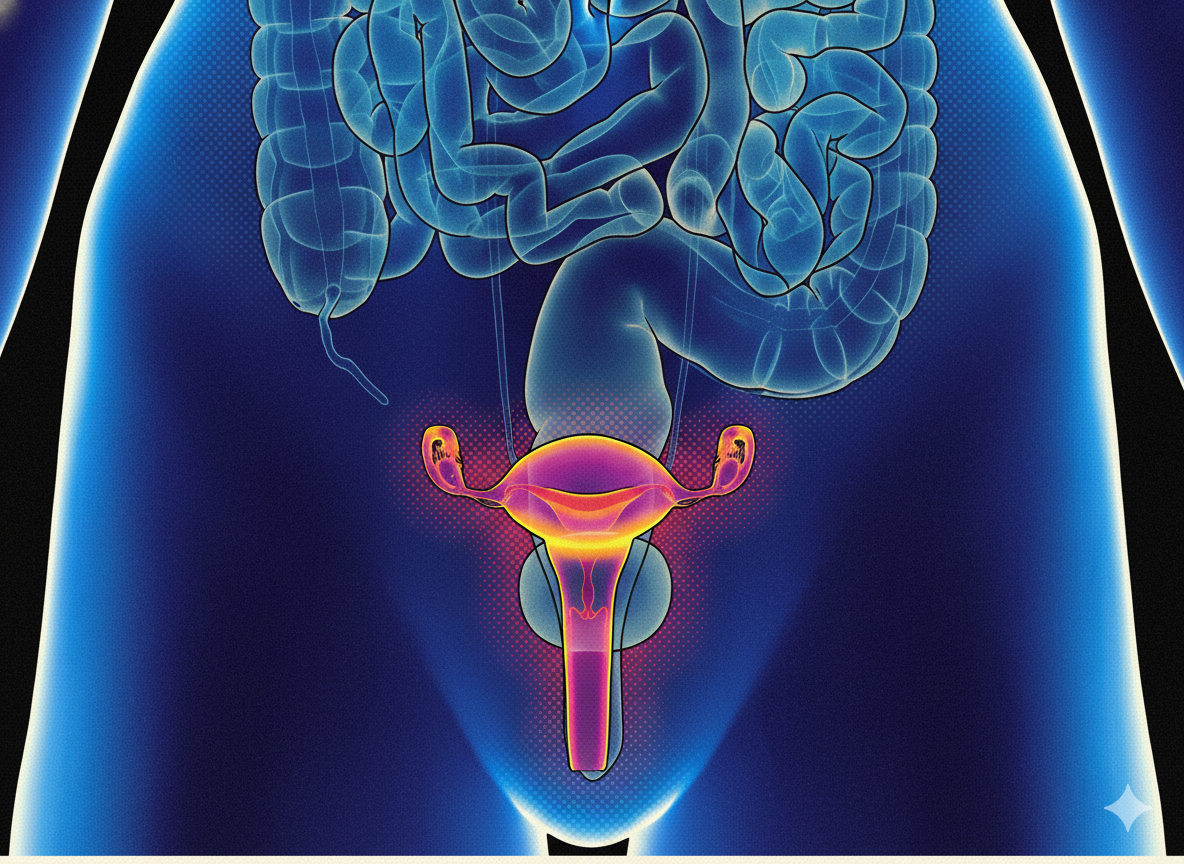
Ovulation is the culmination of a hormonal cascade that begins at the start of each cycle. FSH (follicle-stimulating hormone) drives follicle development in the ovary. As the dominant follicle grows, it produces estrogen, which signals the pituitary to release a surge of LH (luteinizing hormone). The LH surge triggers the final maturation of the egg and, approximately 36 hours later, ovulation, the release of the egg from the follicle.
The egg is viable for fertilization for approximately 12–24 hours post-ovulation. Sperm, if present, can survive in the fallopian tube for up to 5 days. The practical fertile window is about six days: the five days before ovulation plus the day of ovulation itself. The day before and the day of ovulation are the peak fertility days.
12–24 hrs
Egg viability after ovulation, sperm can survive 3–5 days, which is why timing intercourse before ovulation is more effective than after (Wilcox, NEJM 1995)
What OPKs and BBT Actually Tell You
OPKs (ovulation predictor kits) detect the LH surge, they tell you ovulation is imminent (within ~36 hours). They're useful for identifying the most fertile days and timing intercourse. What they don't tell you: whether ovulation actually occurred, whether the egg quality is adequate, or what your luteal phase looks like after ovulation.
BBT (basal body temperature) confirms that ovulation has occurred, the thermal shift happens after ovulation, driven by progesterone. BBT can't predict ovulation, but it tells you the luteal phase has started and gives you information about luteal phase length and progesterone adequacy through the temperature pattern. The Halo Ring makes this continuous and automatic rather than manual.
KEY INSIGHT
A sustained BBT elevation for 12+ days suggests adequate progesterone. A rise below 0.2°F or a luteal phase of 10 days or less can reflect lower progesterone. That's how doctors define luteal phase deficiency, though it also shows up in fertile women and hasn't been proven to cause infertility on its own (ASRM, 2026).
✦ KEEP READING
✦ KEEP READING
Not Sure What Your Body Needs?
Take our free 2-minute quiz and get a personalized supplement protocol built around your specific cycle, hormones, and health signals.
Take the free Score → Explore the App →
Why Timing Isn't the Whole Answer
After 26 years in reproductive health and about 10,000 women seen in clinic, I see the same pattern consistently: women who have tracked their cycles for months or years, timed intercourse perfectly, and still aren't conceiving. Timing is necessary but not sufficient. What it doesn't address: egg quality, uterine receptivity, sperm quality, and the five underlying biological factors that determine whether a timed conception attempt succeeds.
⚠️ IMPORTANT
Women who have tracked their cycles for months or years and timed intercourse perfectly can still not be conceiving, not because of bad timing, but because of unaddressed biological factors like egg quality, progesterone insufficiency, or uterine receptivity. Optimizing timing without addressing these factors is one of the most common reasons fertility attempts stall.
📊 WHAT THE RESEARCH SAYS
A mid-luteal progesterone blood test (about 7 days after ovulation) is a common way to check that ovulation happened. Because progesterone is released in pulses, a single reading can swing a lot, so it is not a precise measure of how well the luteal phase is working (Filicori, J Clin Invest 1984). Some women experience LH surges without ovulating (luteinized unruptured follicle syndrome), making BBT confirmation and progesterone testing critical for a complete picture.
✦ THE CONCEIVABLE SYSTEM
Personalized Supplements. AI Care Team. The Halo Ring.
Everything your body needs to optimize fertility, built around your information, not someone else's.
Take the free Score → Check Out the App →
Frequently Asked Questions
How do I know if I'm actually ovulating and not just getting LH surges?
BBT confirmation is the most accessible method. A sustained thermal shift of at least 0.2°F maintained for 12+ days confirms ovulation occurred. A mid-luteal progesterone blood test (about 7 days after ovulation) is a common way to check that ovulation happened, though because progesterone is released in pulses, a single reading can swing a lot. Some women have LH surges without ovulating (a condition called luteinized unruptured follicle syndrome), which is why BBT confirmation matters.
What does a short luteal phase mean for fertility?
A luteal phase of 10 days or less is how doctors define luteal phase deficiency. It can reflect lower progesterone from the corpus luteum (which forms after ovulation), though it also shows up in fertile women and hasn't been proven to cause infertility on its own. This means even if fertilization occurs, the uterine lining may not be adequately supported for implantation to succeed. Short luteal phase is one of the most common and most underdiagnosed fertility issues, visible in Halo Ring overnight temperature data but rarely tested for in standard fertility workups.
Can stress delay ovulation?
Yes, through the GnRH suppression mechanism. Elevated cortisol from acute or chronic stress delays the LH surge and can push ovulation later in the cycle or suppress it entirely. This is why cycle length variability often increases during high-stress periods. The effect is real and physiologically specific, not psychosomatic.
Is it possible to ovulate twice in one cycle?
Yes, but both ovulations happen within a 24-hour window, not at widely separated times. This is called double ovulation and is the mechanism for fraternal twins. You cannot ovulate once early in the cycle and again later. The hormonal suppression that follows ovulation prevents a second LH surge later in the same cycle.
Does ovulation pain (mittelschmerz) indicate when to time intercourse?
Mittelschmerz, the one-sided pelvic pain some women experience around ovulation, is caused by follicle rupture and can indicate that ovulation is occurring or has just occurred. Because the egg is viable for only 12–24 hours, intercourse at the time of mittelschmerz may actually be slightly late. Timing to 1–2 days before the anticipated ovulation date (using OPK surge detection) is more effective than timing to pain onset.
How does the Conceivable system actually work?
Conceivable combines three things: personalized supplement packs built from your quiz results and health data, an AI care team of 7 specialists (led by Kai, your fertility coordinator) who help you understand your pattern and can suggest a pack, and the Halo Ring for continuous biometric tracking. The system is built on published reproductive-health research and 20 years of clinical practice. It starts at $14.99/month.
How do I know which supplements I actually need?
Take the free 2-minute Conceivable quiz. It analyzes your cycle patterns, energy, stress, digestion, and health history to identify the specific nutrients your body needs, not a generic prenatal, but a protocol built for exactly where you are right now.
Do I need the Halo Ring to use Conceivable?
No. The Halo Ring is optional and adds overnight tracking of temperature, HRV and sleep, which Kai uses to help you understand your pattern and suggest a pack. But the personalized supplement packs and AI care team work without it. The ring is a one-time $250 purchase with no subscription required.
Written by Kirsten Karchmer, founder of Conceivable. She has worked in reproductive health for 26 years, including 20 years in clinical practice, and is a former board-certified reproductive acupuncturist (ABORM) and the author of Seeing Red (Simon & Schuster).
Sources
Your Report puts your cycle, energy, sleep and symptoms in context, then shows what may be helping, what may be getting in the way, and where to start.
Get my Report, $89 Educational guidance, not a diagnosis.Kai is your AI fertility coordinator, built from 20 years of clinical practice. She can answer your specific questions right now.
Chat with Kai in the app
