


 .
. .
.
Your Basal Body Temperature Chart Can Help You Find Hidden Fertility Problems. Here's How.
Tracking your basal body temperature (BBT) can be great for predicting ovulation so you and your partner will know the best time to get it on, but that's not the only trick your BBT can do. Basal body temperature charts can also help you identify possible fertility issues.
While it's ideal to see an obvious biphasic BBT chart, that's a chart with low temperatures the first half of the cycle and high temperatures the second half, many women experience all kinds of variations. And those variations can give us clues into what may be going on with your fertility.
KEY INSIGHT
A BBT chart isn't just a tool for timing intercourse, it's a window into your hormonal health. Deviations from the ideal biphasic pattern can point to specific fertility issues, from low progesterone to PCOS to poor ovarian reserve.
High BBT Temperatures During the Follicular Phase
Ideally, your temperatures should be quite low during your follicular phase (the part of your cycle before ovulation, from days 1-14). At Conceivable, we like to see temperatures that range from about 97.2 - 97.4 degrees F.
Heat is both a cause and a symptom of inflammation, which can affect the whole reproductive system. In fact, over-active inflammatory pathways are now thought to contribute directly to many reproductive issues including recurrent miscarriage, intrauterine growth retardation, menstrual dysfunction, complicated labor, and preeclampsia.
If you notice that your temperatures run high during the follicular phase, heat may dry out your cervical discharge and can compromise egg quality.
⚠️ IMPORTANT
Consistently elevated follicular phase temperatures (above 97.4°F) may signal inflammation affecting your reproductive system, including egg quality and cervical fluid production. This is a pattern worth flagging with your care provider.
Low Temperatures During the Luteal Phase
While temperatures should be low in the follicular phase, your BBTs actually need to be quite high in the luteal phase. A healthy luteal phase BBT will average upwards of 98 degrees F.
Temperatures need to surge in order to stimulate the corpus luteum (the remnants of the follicle that held the egg) to produce progesterone, the primary hormone that's responsible for preparing your uterine lining for embryo implantation and supporting your growing pregnancy.
Nice high temperatures are an indicator that enough progesterone is being to produced to support pregnancy, so keeping an eye on your BBT's in this part of your cycle is extra important.
98°F
The minimum average BBT Conceivable looks for during the luteal phase, a sign that progesterone levels are sufficient to support implantation and early pregnancy

✦ KEEP READING
Not Sure What Your Body Needs?
Take our free 2-minute quiz and get a personalized supplement protocol built around your specific cycle, hormones, and health signals.
Take the free Score → Explore the App →
Correlations Between BBT and Fertility Disorders
In addition to too-high follicular phase temperatures and too-low luteal phase temperatures, there are a few other general correlations we can make between BBTs and common fertility disorders.
Here are a few:
-
Women with elevated follicle-stimulating hormone, poor ovarian reserve, and poor responders for IVF and ovarian stimulation tend to have higher follicular phase temperatures.
-
Women with PCOS (polycystic ovary syndrome) will generally have lower follicular phase temperatures.
-
Women with moderate to severe PMS will have a more saw-toothed pattern chart.
-
Women with recurrent miscarriage and low progesterone will typically have low luteal phase temperatures.
📊 WHAT THE RESEARCH SAYS
Over-active inflammatory pathways are now thought to contribute directly to a range of reproductive issues, including recurrent miscarriage, intrauterine growth retardation, menstrual dysfunction, complicated labor, and preeclampsia. Elevated follicular phase BBT is one of the earliest observable signs of this systemic inflammation.
"By tracking your BBT with a smart fertility system, you will be able to narrow in on your specific problem areas, resulting in a more targeted, informed, and personalized approach to fertility."
Wondering if your BBT's are fertility friendly? By tracking your BBT with a smart fertility system like Conceivable's, you will be able to narrow in on your specific problem areas. This will result in more targeted, informed, and personalized approach to fertility.

✦ THE CONCEIVABLE SYSTEM
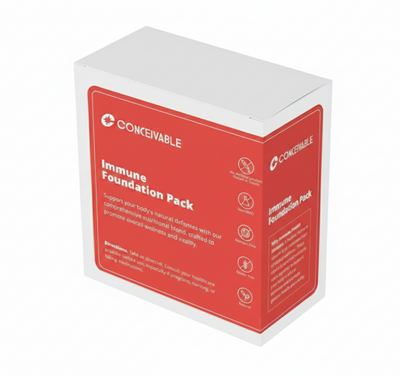
Personalized Supplements. AI Care Team. The Halo Ring.
Everything your body needs to optimize fertility, built around your information, not someone else's.
Take the free Score → Check Out the App →
Frequently Asked Questions
What is the ideal BBT pattern for fertility?
The ideal fertility BBT chart is biphasic, meaning lower temperatures (around 97.2–97.4°F) during the follicular phase (pre-ovulation) and noticeably higher temperatures (averaging 98°F or above) during the luteal phase (post-ovulation). This shift signals that ovulation occurred and that progesterone is being produced at levels sufficient to support implantation and early pregnancy.
Can BBT charts diagnose fertility problems?
BBT charts can't diagnose fertility issues definitively, but they can reveal meaningful patterns that point toward specific concerns, such as low progesterone, PCOS, poor ovarian reserve, or systemic inflammation. Think of your BBT chart as a first-layer signal that helps guide deeper investigation with your care provider.
What does a saw-toothed BBT chart mean?
A saw-toothed pattern, where temperatures fluctuate erratically rather than showing a clear biphasic shift, is commonly associated with moderate to severe PMS. It may also reflect hormonal instability across the cycle. If you notice this pattern consistently, it's worth discussing with a fertility specialist or using a system like Conceivable that can help interpret your information over time.
How does the Conceivable system actually work?
Conceivable combines three things: personalized supplement packs built from your quiz results and health data, an AI care team of 7 specialists (led by Kai, your fertility coordinator) who help you understand your pattern and can suggest a pack, and the Halo Ring for continuous biometric tracking. The system is built on published reproductive-health research and 20 years of clinical practice. It starts at $14.99/month.
How do I know which supplements I actually need?
Take the free 2-minute Conceivable quiz. It analyzes your cycle patterns, energy, stress, digestion, and health history to identify the specific nutrients your body needs, not a generic prenatal, but a protocol built for exactly where you are right now.
Do I need the Halo Ring to use Conceivable?
No. The Halo Ring is optional and adds overnight tracking of temperature, HRV and sleep, which Kai uses to help you understand your pattern and suggest a pack. But the personalized supplement packs and AI care team work without it. The ring is a one-time $250 purchase with no subscription required.
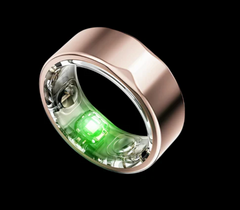
The Halo Ring reads your overnight temperature, sleep and HRV automatically, the signals this article is about, for $250.00.
Meet the Halo RingKai is your AI fertility coordinator, built from 20 years of clinical practice. She can answer your specific questions right now.
Chat with Kai in the app
