


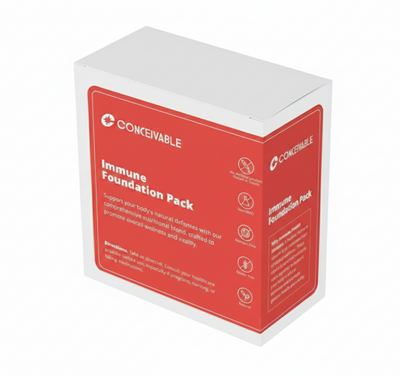
Fertility Pills: What's Actually Worth Taking vs. What's Just Marketing
Walk into any health food store or open any fertility forum and you'll be confronted with an overwhelming number of "fertility supplements." Pills, powders, gummies, blends — all promising to support, optimize, enhance, or boost your fertility. Most of them aren't lying, exactly. They're just not telling you the whole truth.
"There is no supplement that improves fertility in general. There are nutrients that address specific underlying biological factors that impair fertility in specific women. The difference matters enormously."
What's Actually Worth Taking (And Why)
CoQ10 (ubiquinol form, 400–600mg): The strongest evidence for egg quality support. Mitochondrial function is the limiting factor in egg quality, particularly in women over 35. CoQ10 is involved in mitochondrial energy production and has antioxidant properties that protect eggs from oxidative damage. The evidence is real — but the dose matters enormously. Most consumer supplements are dosed at 100–200mg, which is unlikely to be therapeutic.
600mg
Daily CoQ10 dose used in fertility research — most consumer supplements contain 100–200mg, a threefold to sixfold gap
Methylfolate (not just folic acid): Folic acid is essential. But a significant percentage of women have MTHFR variants that impair conversion of synthetic folic acid to the active form. If you have this variant, you need methylfolate specifically. Worth testing for.
KEY INSIGHT
Switching from folic acid to methylfolate costs the same and potentially makes a significant difference if you have MTHFR variants. It's one of the lowest-effort, highest-impact changes in fertility supplementation.
Inositol (myo-inositol + D-chiro-inositol, 40:1 ratio): The most directly evidence-supported intervention for insulin-related ovarian dysfunction. Relevant for PCOS, but also for subclinical blood sugar dysregulation that never triggers a formal diagnosis. One of the most underutilized interventions in fertility — probably because it doesn't have the marketing budget of branded fertility supplements.
Vitamin D (therapeutic dose based on blood levels): Almost everyone is insufficient, not just deficient. Standard prenatal doses won't correct insufficiency. Get your levels tested. Target 50–70 ng/mL.
Omega-3 fatty acids (EPA/DHA, 2g+ combined): Systemic inflammation is one of the most common underlying factors in unexplained infertility. Therapeutic-dose omega-3s are among the best-studied anti-inflammatory interventions available. Most prenatal omega-3 supplements are underdosed for anti-inflammatory purposes.
📊 WHAT THE RESEARCH SAYS
Clinical studies on CoQ10 supplementation for egg quality have used doses of 400–600mg of the ubiquinol form daily. Research on inositol for PCOS-related ovarian dysfunction consistently uses the 40:1 myo-inositol to D-chiro-inositol ratio. Vitamin D targets of 50–70 ng/mL are associated with better reproductive outcomes in multiple fertility studies. Therapeutic omega-3 doses for anti-inflammatory effect begin at 2g EPA/DHA combined — a threshold most prenatal formulas do not reach.
Not Sure What Your Body Needs?
Take our free 2-minute quiz and get a personalized supplement protocol built around your specific cycle, hormones, and health signals.
Take the Quiz → Explore the App →
What's Mostly Marketing
Proprietary fertility blends with 20 ingredients at sub-therapeutic doses. If a product has CoQ10 at 50mg, vitamin D at 400 IU, and 15 other ingredients at similarly small amounts, you're paying for a label, not a protocol.
Products that don't tell you why specific ingredients are included at specific doses. Transparency about dosing rationale is a marker of a serious product. Anything that promises to "balance hormones naturally" or "optimize your fertility journey" without telling you exactly what mechanism it's targeting and at what dose is making promises it can't keep.
⚠️ IMPORTANT
A $90 branded fertility blend with 15 ingredients at token doses is not worth the premium over targeted individual supplements at appropriate doses. Check every label: if the dose isn't listed or doesn't match the clinical research threshold, the ingredient isn't doing what you're paying for it to do.
Where This Fits in a Real System
After 25 years and 10,000+ credited pregnancies, the clearest thing I can tell you is this: the best fertility supplement is the one that addresses your actual underlying issue. The five underlying factors — poor blood quality, subclinical inflammation, blood sugar dysregulation, progesterone insufficiency, stress-driven HPA axis disruption — require different interventions. At Conceivable, your personalized protocol is built from your quiz results and your Halo Ring data. Kai monitors your response over time and adjusts. That's a protocol. Not a pill.
✦ THE CONCEIVABLE SYSTEM
Personalized Supplements. AI Care Team. The Halo Ring.
Everything your body needs to optimize fertility — built around your data, not someone else's.
Take the Quiz → Check Out the App →
Frequently Asked Questions
Are expensive fertility supplements worth the price?
Price correlates with quality only when the premium buys better sourcing, more bioavailable forms, or therapeutic doses — not when it buys marketing. Ubiquinol costs more than ubiquinone. Methylfolate costs more than folic acid. Those premiums are worth it. A $90 branded fertility blend with 15 ingredients at token doses is not worth the premium over targeted individual supplements at appropriate doses.
Can I take all of these at once, or will they interact?
Most of the evidence-supported fertility supplements are safe to combine. CoQ10, methylfolate, inositol, vitamin D, and omega-3s have no significant interactions at standard doses. The issue isn't interaction — it's redundancy and prioritization. Taking everything at once without knowing which factors are most active in your situation means you're spending money broadly when you should be spending it precisely.
How do I know if a supplement is actually working?
For most fertility supplements, you can't tell from symptoms alone — the biological changes they produce aren't directly felt. This is why continuous monitoring matters. Halo Ring data shows whether glucose patterns are stabilizing, whether HRV is improving, whether sleep architecture is changing. These are objective markers that tell you whether the biology is actually responding.
Should I stop taking fertility supplements during my period?
No — for most fertility supplements, consistent daily use is more important than cycling around your period. The 90-day optimization window requires sustained intervention. The exception would be supplements your RE specifically asks you to pause during stimulation or around transfer — always follow your clinic's guidance on that.
Do fertility supplements expire or lose potency?
Yes. CoQ10 in particular is sensitive to heat, light, and oxidation. Store supplements in a cool, dark place — not the bathroom cabinet above a steamy shower. Check expiration dates. Supplements that have been sitting in a warm cabinet for 18 months are unlikely to be at full potency regardless of what the label says.
How does the Conceivable system actually work?
Conceivable combines three things: personalized supplement packs built from your quiz results and health data, an AI care team of 7 specialists (led by Kai, your fertility coordinator) who adjust your protocol as your body changes, and the Halo Ring for continuous biometric tracking. The system is built on 240,000+ clinical data points and 20 years of practice. It starts at $15/month.
How do I know which supplements I actually need?
Take the free 2-minute Conceivable quiz. It analyzes your cycle patterns, energy, stress, digestion, and health history to identify the specific nutrients your body needs — not a generic prenatal, but a protocol built for exactly where you are right now.
Do I need the Halo Ring to use Conceivable?
No. The Halo Ring is optional and adds continuous tracking of BBT, HRV, sleep, and blood glucose — which Kai uses to fine-tune your protocol in real time. But the personalized supplement packs and AI care team work without it. The ring is a one-time $250 purchase with no subscription required.
Written by Kirsten Karchmer, reproductive medicine practitioner with 25 years of clinical experience and 10,000+ credited pregnancies, and author of The Road to Better Fertility.
Kai is your AI fertility coordinator — trained on 25 years of clinical data. She can answer your specific questions right now.
Chat with Kai →