


 .
. .
.
Protein and Fertility: How Much You Actually Need and Why It Matters
Protein doesn't get nearly enough attention in fertility nutrition conversations. The focus tends to be on specific supplements, CoQ10, folate, inositol, while the foundational dietary factor that affects blood sugar stability, hormone production, and egg quality gets treated as an afterthought. Let me correct that.
"Adequate protein is not just a fitness goal. It's one of the most direct dietary interventions for blood sugar stability, hormonal balance, and the cellular energy production that egg quality depends on."
How Protein Affects Fertility Biology
Blood sugar stability: Protein slows gastric emptying and blunts the glucose response to carbohydrates, the most direct dietary mechanism for reducing post-meal glucose spikes. For women with blood sugar dysregulation affecting ovarian function, adequate protein at every meal is as important as any supplement intervention.
Hormone production: Peptide hormones, including FSH, LH, insulin, and growth hormone, are made from amino acids. Chronically inadequate protein intake can impair the production of these hormones at the margin. This isn't typically the primary cause of hormonal issues, but it's a contributing factor that's easy to address.
Egg quality: Mitochondrial function, the limiting factor in egg quality, depends on adequate amino acid availability for the biosynthesis of mitochondrial proteins. CoQ10 supports the electron transport chain; protein provides the structural materials the mitochondria are made of. Both are necessary.
KEY INSIGHT
CoQ10 supports the electron transport chain, but protein provides the structural materials the mitochondria are actually built from. Targeting egg quality without addressing protein intake is like optimizing the engine without building the car.
How Much You Actually Need
The RDA for protein is 0.8g per kilogram of body weight, a floor to prevent deficiency, not an optimization target. For fertility optimization, I'd recommend 1.2–1.6g per kilogram of body weight daily. For a 140-pound (63kg) woman, that's 75–100g daily. This requires deliberate inclusion of protein at every meal, it doesn't happen by default on a typical Western diet.
1.2–1.6g/kg
Protein intake associated with optimal metabolic health, most women eating "normally" fall below this without deliberate focus on protein
⚠️ IMPORTANT: Protein at Breakfast Is Critical
Skipping protein at breakfast and making it up with a large protein meal at dinner doesn't produce the same glucose stability benefits as distributing protein across all three meals. Breakfast protein specifically prevents the mid-morning glucose and cortisol spike that affects hormonal patterns for the rest of the day.
✦ KEEP READING
- CoQ10 and Fertility: Every Benefit Explained (With the Caveats You Actually Need) →
- What to Eat During the Two-Week Wait (And What to Stop Obsessing Over) →
- Signs You're Eating Too Much Sugar: And What It's Doing to Your Fertility →
- Foods That Make Anxiety Worse When You're Trying to Conceive: And What to Eat Instead →
✦ KEEP READING
- CoQ10 and Fertility: Every Benefit Explained (With the Caveats You Actually Need) →
- What to Eat During the Two-Week Wait (And What to Stop Obsessing Over) →
- Signs You're Eating Too Much Sugar: And What It's Doing to Your Fertility →
- Foods That Make Anxiety Worse When You're Trying to Conceive: And What to Eat Instead →
Not Sure What Your Body Needs?
Take our free 2-minute quiz and get a personalized supplement protocol built around your specific cycle, hormones, and health signals.
Take the free Score → Explore the App →
Best Sources
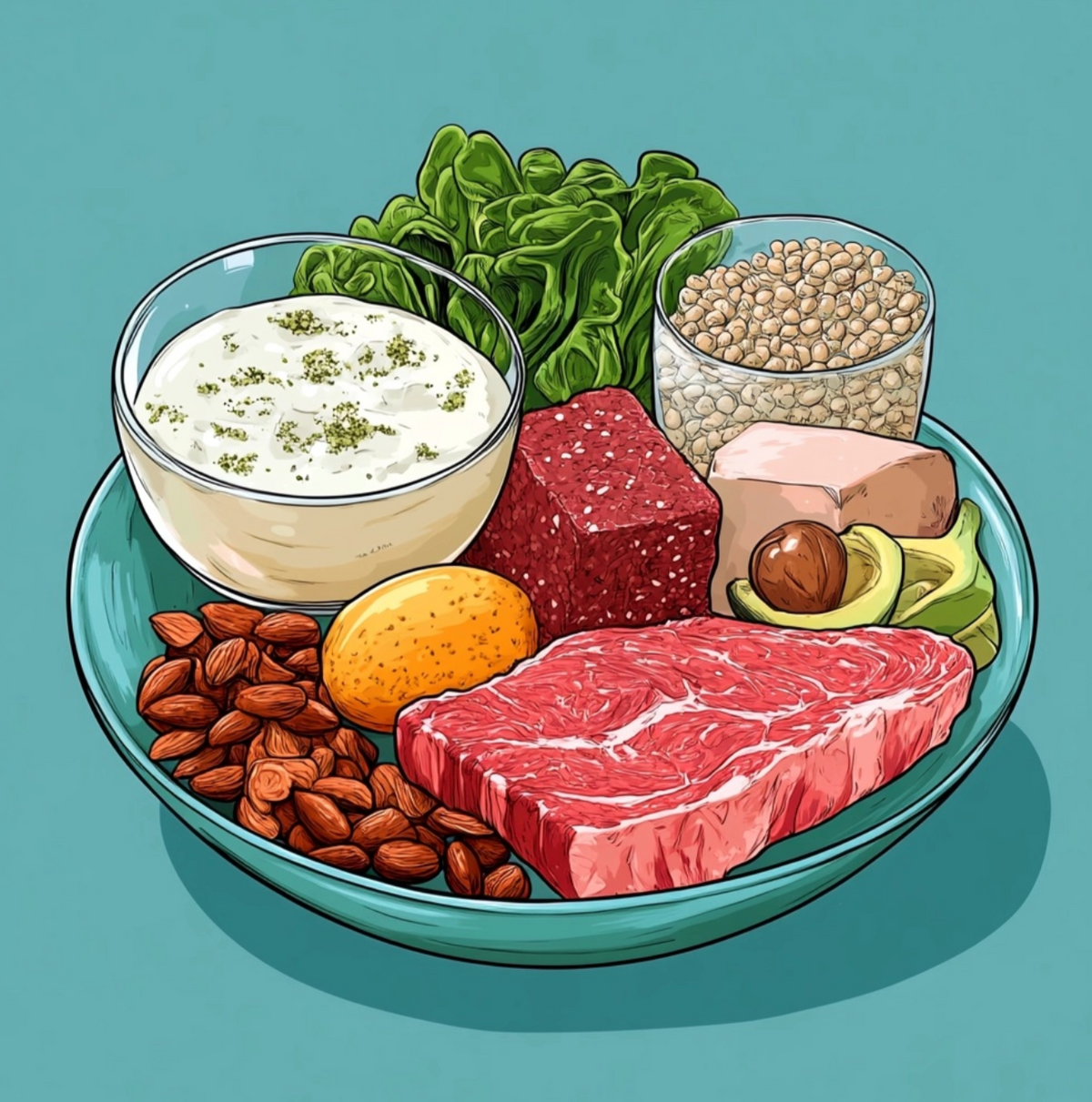
Animal proteins (eggs, poultry, fish, meat, dairy) provide complete amino acid profiles and high bioavailability. Fatty fish (salmon, sardines, mackerel) add omega-3s with the protein. Plant proteins (legumes, tofu, tempeh, edamame) are excellent sources but typically need combination to achieve complete amino acid profiles. Collagen peptides are a convenient protein addition but lack tryptophan and should not be a primary protein source.
📊 WHAT THE RESEARCH SAYS
Research on dietary protein and reproductive outcomes consistently shows that women with higher protein intake, particularly from varied sources including plant proteins, have better insulin sensitivity and more regular ovulatory cycles than those in the lowest protein intake quartile. Distribution across meals, not just total daily intake, is a key modifier of these outcomes.
✦ THE CONCEIVABLE SYSTEM
Personalized Supplements. AI Care Team. The Halo Ring.
Everything your body needs to optimize fertility, built around your information, not someone else's.
Take the free Score → Check Out the App →
Frequently Asked Questions
Does a vegetarian or vegan diet provide enough protein for fertility?
Yes, with deliberate planning. Plant proteins are lower in some essential amino acids than animal proteins, so variety and combination (legumes with grains, for example) matters. Vitamin B12, omega-3 DHA (from algae oil rather than fish), and zinc are the nutrients most commonly insufficient in plant-based fertility diets, targeted supplementation covers these gaps.
Can too much protein be harmful for fertility?
At very high intakes (above 2.5g/kg), there are theoretical concerns about nitrogen load and kidney stress. For practical fertility nutrition purposes, reaching 1.2–1.6g/kg through whole food sources is well within safe ranges. The women I see are almost uniformly under-eating protein, not over-eating it.
Does protein timing matter for fertility specifically?
Breakfast protein is the highest-impact timing decision, it sets the glucose and cortisol pattern for the morning. Evening protein is relevant for overnight glucose stability and growth hormone secretion during sleep. Distributing protein across three meals produces better metabolic outcomes than front- or back-loading.
What about protein powders, are they safe while trying to conceive?
High-quality protein powders (whey isolate, pea protein, hemp protein from reputable sources) are generally safe. What to avoid: protein powders with artificial sweeteners in large amounts, proprietary blends without transparent ingredient disclosure, and products marketed with heavy metal or contamination concerns (third-party testing certification matters). Whole food protein sources are always preferable when practical.
Is protein intake related to egg quality specifically?
Indirectly, through the mitochondrial support mechanism and blood sugar stability that affects the ovarian environment. The most direct egg quality interventions are still CoQ10 and addressing the specific underlying factors affecting your biology. Adequate protein is foundational, but it's the base on which those interventions work, not a replacement for them.
How does the Conceivable system actually work?
Conceivable combines three things: personalized supplement packs built from your quiz results and health data, an AI care team of 7 specialists (led by Kai, your fertility coordinator) who help you understand your pattern and can suggest a pack, and the Halo Ring for continuous biometric tracking. The system is built on published reproductive-health research and 20 years of clinical practice. It starts at $14.99/month.
How do I know which supplements I actually need?
Take the free 2-minute Conceivable quiz. It analyzes your cycle patterns, energy, stress, digestion, and health history to identify the specific nutrients your body needs, not a generic prenatal, but a protocol built for exactly where you are right now.
Do I need the Halo Ring to use Conceivable?
No. The Halo Ring is optional and adds overnight tracking of temperature, HRV and sleep, which Kai uses to help you understand your pattern and suggest a pack. But the personalized supplement packs and AI care team work without it. The ring is a one-time $250 purchase with no subscription required.
Written by Kirsten Karchmer, founder of Conceivable. She has worked in reproductive health for 26 years, including 20 years in clinical practice, and is a former board-certified reproductive acupuncturist (ABORM) and the author of Seeing Red (Simon & Schuster).
Your Report puts your cycle, energy, sleep and symptoms in context, then shows what may be helping, what may be getting in the way, and where to start.
Get my Report, $89 Educational guidance, not a diagnosis.Kai is your AI fertility coordinator, built from 20 years of clinical practice. She can answer your specific questions right now.
Chat with Kai in the app
