


 .
. .
.
Mira Fertility Tracker vs. Conceivable: Which One Actually Gives You Answers?
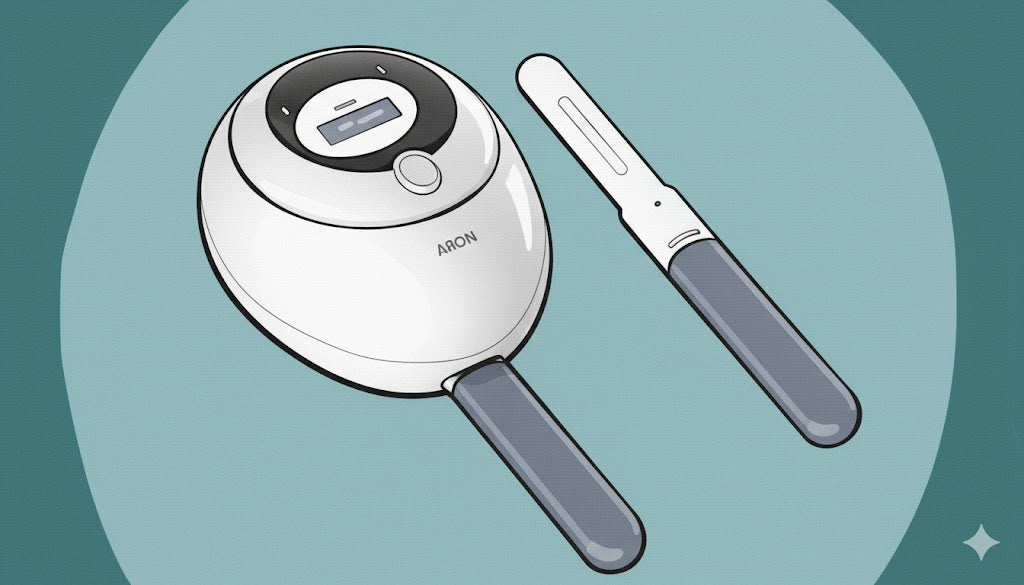
You've probably heard of Mira, the wand that measures LH, FSH, estrogen, and progesterone from urine at home, and gives you continuous hormonal data that a standard ovulation test doesn't provide. It's a genuinely good product for what it does. But here's the question I get from patients: is that enough? Or do I need something different? Let me break down what each approach actually gives you.
"Tracking your hormones is not the same thing as understanding your fertility. Data without context doesn't tell you what to do next."
What Mira Does Well
Mira's core value is quantified hormone measurement at home. Instead of a simple LH surge positive/negative, you get actual numerical values for LH, E3G (estrogen metabolite), PdG (progesterone metabolite), and FSH, the same hormones your doctor measures, but tracked daily through your cycle. This is genuinely more information than a standard ovulation test provides.
For women with irregular cycles, or who have been told their hormone levels are "borderline," this kind of home monitoring adds real signal. You can see whether your LH surge is robust or weak, whether your luteal phase PdG is adequate, and whether your follicular phase estrogen patterns are consistent. That's useful.
4
Hormones Mira tracks, LH, FSH, estrogen metabolite, progesterone metabolite, more than standard OPKs, but still one dimension
Where Mira Has Limits
Mira tells you about your hormones. It doesn't tell you about your metabolic function, your sleep quality, your HRV, your inflammation markers, your temperature patterns, or the five underlying physiological factors that most commonly drive female infertility. It's a surveillance tool for ovarian hormones specifically, and ovarian hormones are one piece of the picture.
More importantly: Mira identifies patterns in your cycle. It doesn't help you change them. Knowing your LH surge is weak tells you something is off, but not why, and not what to do about it. For women who've been tracking for months with no pregnancy, more tracking isn't the answer. Getting to the root of why the patterns are off is.
⚠️ IMPORTANT
If you've been using Mira (or any ovulation tracker) for more than 3 cycles without conceiving, you have data. Now the question is what to do with it. Tracking the problem isn't the same as solving it.
✦ KEEP READING
✦ KEEP READING
Not Sure What Your Body Needs?
Take our free 2-minute quiz and get a personalized supplement protocol built around your specific cycle, hormones, and health signals.
Take the free Score → Explore the App →
What Conceivable Adds
The Conceivable system is built around a different question: not "when are you ovulating" but "why isn't this working, and what do we do about it." The Halo Ring monitors overnight temperature, HRV and sleep quality, giving a physiological picture that urinary hormone testing doesn't capture. Your personalized supplement protocol addresses the specific underlying factors identified from your complete profile.
Kai, our AI coordinator, doesn't just show you your information. Kai helps you understand your pattern and can suggest a pack. That's a different kind of tool than a tracker.
For women who've been tracking and not getting pregnant, the combination of continuous monitoring plus targeted supplementation plus clinical oversight is what moves the needle. In our 2014–2016 pilot, a retrospective study with no control group, 22 of 105 sub-fertile participants (21%) reported a pregnancy during the program, and self-reported menstrual cramping fell 28% (p = 0.003). These results justify, but do not replace, a controlled prospective study.
📊 WHAT THE RESEARCH SAYS
In our 2014–2016 pilot, a retrospective study with no control group, 22 of 105 sub-fertile participants (21%) reported a pregnancy during the program, and self-reported menstrual cramping fell 28% (p = 0.003). These results justify, but do not replace, a controlled prospective study. The system is built on published reproductive-health research and 20 years of clinical practice.
Which One Is Right for You?
Mira makes sense if you want better hormone data and your primary goal is more accurate ovulation timing, particularly if you have irregular cycles or want to understand your luteal phase patterns. It's a good diagnostic tool.
Conceivable makes sense if your goal is to actually change your fertility picture, to address the underlying factors that are keeping you from conceiving or sustaining a pregnancy. These tools aren't mutually exclusive: some women use Mira's hormonal data alongside Conceivable's physiological monitoring, giving both dimensions. But if you have to choose where to invest, ask yourself: do I need more data, or do I need a plan that fixes what the data is showing?
KEY INSIGHT
Mira and Conceivable measure entirely different dimensions of fertility. Mira tracks your ovarian hormones. Conceivable tracks your physiological function, and then tells you what to do about both. The most powerful approach combines them.
✦ THE CONCEIVABLE SYSTEM
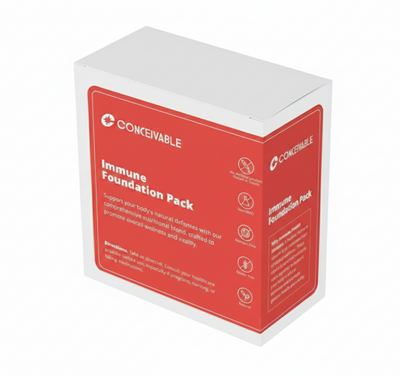
Personalized Supplements. AI Care Team. The Halo Ring.
Everything your body needs to optimize fertility, built around your information, not someone else's.
Take the free Score → Check Out the App →
Frequently Asked Questions
Can I use Mira and Conceivable together?
Yes, they measure different dimensions of your fertility picture. Mira tracks your ovarian hormone patterns through urine. Conceivable's Halo Ring tracks your physiological patterns through continuous wearable monitoring. The data is complementary. If you're already using Mira, Conceivable adds the layer of what to do about what you're seeing.
Is Mira accurate?
Mira's measurements correlate reasonably well with serum hormone values, though there's variability. It's more informative than a standard LH test strip, and the trend data over multiple cycles is the most valuable output. No home test replaces clinical blood work, but for cycle monitoring purposes, Mira provides meaningful quantitative data.
What does the Halo Ring track that Mira doesn't?
Completely different dimensions. The Halo Ring monitors overnight temperature (all night, not just a single morning reading), heart rate variability (HRV), and sleep quality and stages. These reflect your metabolic function, stress physiology, and recovery, all of which have direct implications for fertility. Mira monitors urinary hormone metabolites. Together they give a more complete picture than either alone.
I've been using Mira for 6 months and still not pregnant, what should I try next?
Six months of good cycle data without conception means you have information but need interpretation and intervention. The patterns Mira has shown you, whether your luteal phase PdG is adequate, whether your LH surge is robust, whether your cycle length is consistent, point toward the areas that need addressing. Conceivable's approach would look at the complete physiology behind those patterns and build a targeted plan. The tracker got you information. Now it's time to act on it.
Does Conceivable work if I don't have a specific diagnosis?
Yes, actually, "unexplained infertility" is where Conceivable's approach is often most valuable. Unexplained infertility almost always means the standard workup came back normal, not that there's nothing wrong. The five factors we consistently address, blood quality and circulation, subclinical inflammation, blood sugar dysregulation, progesterone insufficiency, and stress-driven HPA disruption, are rarely tested for in a standard fertility workup. They're exactly the kind of underlying issues that show up as "everything looks normal" but are keeping women from conceiving.
How does the Conceivable system actually work?
Conceivable combines three things: personalized supplement packs built from your quiz results and health data, an AI care team of 7 specialists (led by Kai, your fertility coordinator) who help you understand your pattern and can suggest a pack, and the Halo Ring for continuous biometric tracking. The system is built on published reproductive-health research and 20 years of clinical practice. It starts at $14.99/month.
How do I know which supplements I actually need?
Take the free 2-minute Conceivable quiz. It analyzes your cycle patterns, energy, stress, digestion, and health history to identify the specific nutrients your body needs, not a generic prenatal, but a protocol built for exactly where you are right now.
Do I need the Halo Ring to use Conceivable?
No. The Halo Ring is optional and adds overnight tracking of temperature, HRV and sleep, which Kai uses to help you understand your pattern and suggest a pack. But the personalized supplement packs and AI care team work without it. The ring is a one-time $250 purchase with no subscription required.
Written by Kirsten Karchmer, founder of Conceivable. She has worked in reproductive health for 26 years, including 20 years in clinical practice, and is a former board-certified reproductive acupuncturist (ABORM) and the author of Seeing Red (Simon & Schuster).
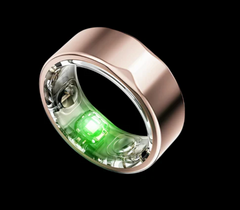
The Halo Ring reads your overnight temperature, sleep and HRV automatically, the signals this article is about, for $250.00.
Meet the Halo RingKai is your AI fertility coordinator, built from 20 years of clinical practice. She can answer your specific questions right now.
Chat with Kai in the app
