


 .
. .
.
Inositol and Fertility: Why This Underrated Supplement Might Be What You're Missing
If you've been doing your fertility supplement research seriously, you've probably heard of inositol, but you may not have heard about it with the emphasis it deserves. It doesn't have the marketing presence of CoQ10 or the brand recognition of prenatal vitamins. But for the right woman in the right biological situation, inositol is one of the most directly effective fertility interventions available.
"Inositol is one of the most evidence-supported fertility nutrients available, and one of the most underused. It doesn't have a marketing budget. But it has clinical trial data, and that matters more."
What Inositol Actually Does
Inositol is a naturally occurring compound involved in cell signaling, particularly in the insulin signaling pathway. Myo-inositol (MI) acts as a second messenger for insulin receptor signaling, when insulin binds to its receptor, myo-inositol is involved in transmitting that signal into the cell. When myo-inositol is depleted or the signaling pathway is disrupted, insulin resistance develops at the cellular level even when insulin levels appear normal on blood tests.
D-chiro-inositol (DCI) is a metabolite of myo-inositol involved in downstream glucose metabolism and glycogen synthesis. The two forms work together, myo-inositol is the primary form in most tissues, with DCI playing a specific role in hepatic and ovarian tissue particularly.
In the ovary specifically, inositol deficiency impairs the FSH signaling that drives follicle development and egg maturation. This is why ovarian function is so directly affected by insulin dysregulation, and why inositol is so specifically relevant to fertility.
KEY INSIGHT
Insulin resistance can develop at the cellular level, affecting ovarian function and FSH signaling, even when your standard blood tests look completely normal. This is why inositol is relevant to women who've never been told they have a blood sugar problem.
The Evidence for Fertility
40:1
Optimal myo-inositol to D-chiro-inositol ratio for ovarian function, the ratio the research consistently uses, not just the raw amount
The strongest evidence is in PCOS, multiple randomized controlled trials showing improvements in ovulation rates, reductions in androgen levels, improved insulin sensitivity, and better IVF outcomes in women with PCOS who supplemented inositol. Some studies show effects comparable to metformin for specific PCOS outcomes, without the GI side effects.
But the evidence isn't limited to PCOS. Research has also shown benefits for non-PCOS women with unexplained infertility, women with insulin resistance who don't meet PCOS criteria, and women with diminished ovarian reserve. The mechanism, improved insulin receptor signaling improving FSH response, is relevant across these populations.
📊 WHAT THE RESEARCH SAYS
Multiple randomized controlled trials in women with PCOS show that myo-inositol supplementation improves ovulation rates, reduces androgen levels, and enhances IVF outcomes, with some studies demonstrating effects comparable to metformin, but without the GI side effects. Benefits have also been documented in non-PCOS women with unexplained infertility and diminished ovarian reserve.
✦ KEEP READING
✦ KEEP READING
Not Sure What Your Body Needs?
Take our free 2-minute quiz and get a personalized supplement protocol built around your specific cycle, hormones, and health signals.
Take the free Score → Explore the App →
The Ratio That Actually Matters
Not all inositol supplements are equivalent. Research consistently shows that a 40:1 ratio of myo-inositol to D-chiro-inositol produces better outcomes than myo-inositol alone or different ratios. This reflects the physiological distribution in ovarian follicular fluid. Products that don't specify the ratio, or that use a different ratio, may not produce the same effects as the research.
⚠️ IMPORTANT
When evaluating an inositol supplement, look for the specific ratio (40:1 MI:DCI) and the total daily dose (2–4g myo-inositol is the range used in most research). If the label doesn't specify the ratio or the dose is unclear, move on. The ratio is not a marketing detail, it reflects the actual physiology of your ovarian follicular fluid.
Who Needs Inositol Most
Women with PCOS, this is the clearest indication. Women with irregular cycles or anovulation without a PCOS diagnosis, particularly if there are signs of insulin resistance. Women with poor IVF egg quality who haven't tried inositol. Women with blood sugar swings found on a glucose tolerance test or continuous glucose monitor, even without a formal insulin resistance diagnosis. After 26 years in reproductive health and about 10,000 women seen in clinic, I find inositol is underused in every one of these populations.
KEY INSIGHT
After 20 years of clinical practice and about 10,000 women seen in clinic, inositol remains consistently underused, even in women who clearly fit the profile. If you have irregular cycles, poor IVF egg quality, or any sign of glucose dysregulation, it belongs in the conversation.
✦ THE CONCEIVABLE SYSTEM
Personalized Supplements. AI Care Team. The Halo Ring.
Everything your body needs to optimize fertility, built around your information, not someone else's.
Take the free Score → Check Out the App →
Frequently Asked Questions
Is inositol the same as vitamin B8?
Inositol is sometimes called vitamin B8, though it's not technically a vitamin since the body can synthesize it. It's more accurately classified as a sugar alcohol or a pseudovitamin. The "B8" designation is informal and you'll see it used inconsistently. What matters for fertility is the form (myo-inositol + D-chiro-inositol), the ratio (40:1), and the dose (2–4g myo-inositol daily).
How long does inositol take to work for cycle regulation?
Most studies show measurable improvements in ovulatory function within 2–3 months of consistent supplementation. Full cycle regularization, consistent ovulation at predictable intervals, typically takes 3–6 months. The Halo Ring makes this progress visible through overnight temperature pattern changes rather than requiring you to wait for confirmed pregnancies to know if things are improving.
Can I take inositol if I don't have PCOS?
Yes, if blood sugar dysregulation or insulin resistance is part of your picture, inositol is relevant regardless of PCOS diagnosis. Many women have subclinical insulin resistance that affects ovarian function without meeting PCOS diagnostic criteria. A continuous glucose monitor (a separate device) or an oral glucose tolerance test is one of the most direct ways to identify whether this is happening in your specific biology.
Is inositol powder better than capsules?
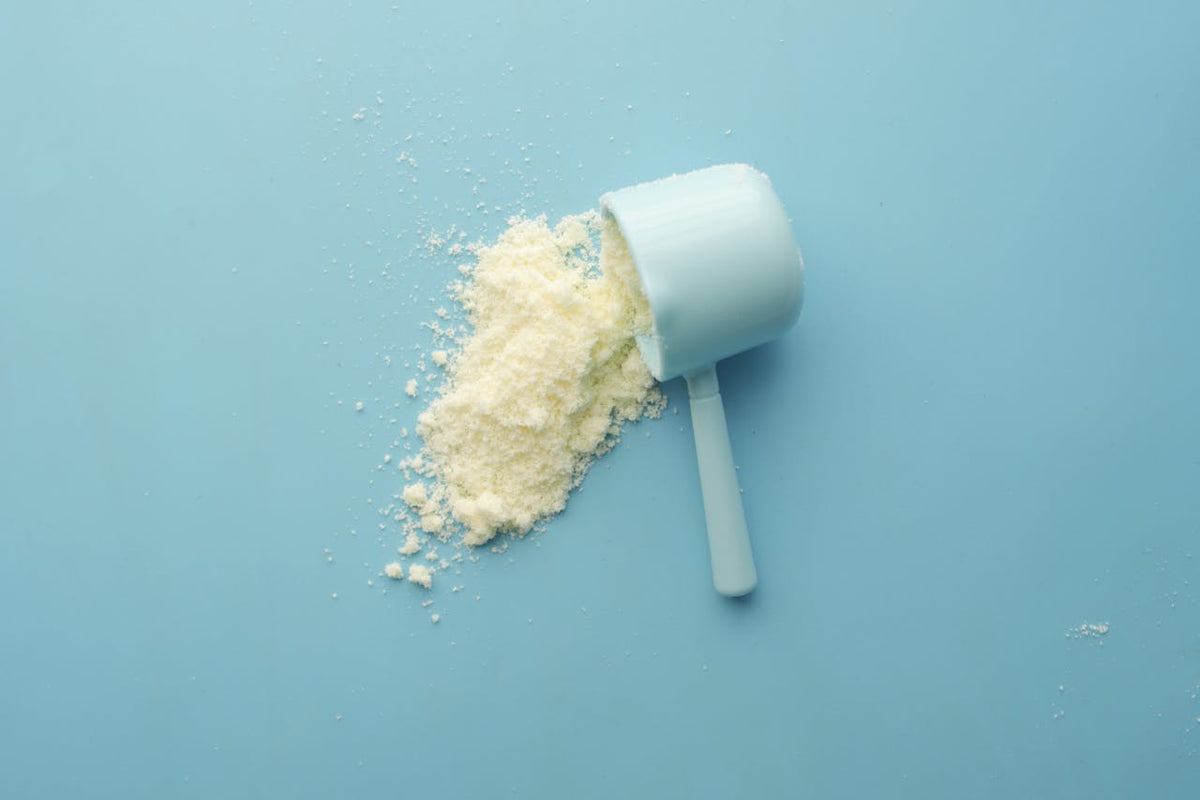
Powder allows for more flexible dosing and is often less expensive at therapeutic doses. At 2–4g daily, the pill burden for capsule forms is significant, typically 4–8 capsules. Powder dissolved in water is often more practical. Conceivable's inositol formulation is available in powder form to make therapeutic dosing manageable.
Can inositol be taken alongside metformin?
Yes, inositol and metformin work through complementary mechanisms and are sometimes used together. Some research suggests the combination produces better outcomes than either alone for PCOS specifically. If you're on metformin, discuss adding inositol with your prescribing physician, they should be aware of all supplements you're taking, particularly those affecting the same metabolic pathway.
How does the Conceivable system actually work?
Conceivable combines three things: personalized supplement packs built from your quiz results and health data, an AI care team of 7 specialists (led by Kai, your fertility coordinator) who help you understand your pattern and can suggest a pack, and the Halo Ring for continuous biometric tracking. The system is built on published reproductive-health research and 20 years of clinical practice. It starts at $14.99/month.
How do I know which supplements I actually need?
Take the free 2-minute Conceivable quiz. It analyzes your cycle patterns, energy, stress, digestion, and health history to identify the specific nutrients your body needs, not a generic prenatal, but a protocol built for exactly where you are right now.
Do I need the Halo Ring to use Conceivable?
No. The Halo Ring is optional and adds overnight tracking of temperature, HRV and sleep, which Kai uses to help you understand your pattern and suggest a pack. But the personalized supplement packs and AI care team work without it. The ring is a one-time $250 purchase with no subscription required.
Written by Kirsten Karchmer, founder of Conceivable. She has worked in reproductive health for 26 years, including 20 years in clinical practice, and is a former board-certified reproductive acupuncturist (ABORM) and the author of Seeing Red (Simon & Schuster).
Your Report puts your cycle, energy, sleep and symptoms in context, then shows what may be helping, what may be getting in the way, and where to start.
Get my Report, $89 Educational guidance, not a diagnosis.Kai is your AI fertility coordinator, built from 20 years of clinical practice. She can answer your specific questions right now.
Chat with Kai in the app
