


 .
. .
.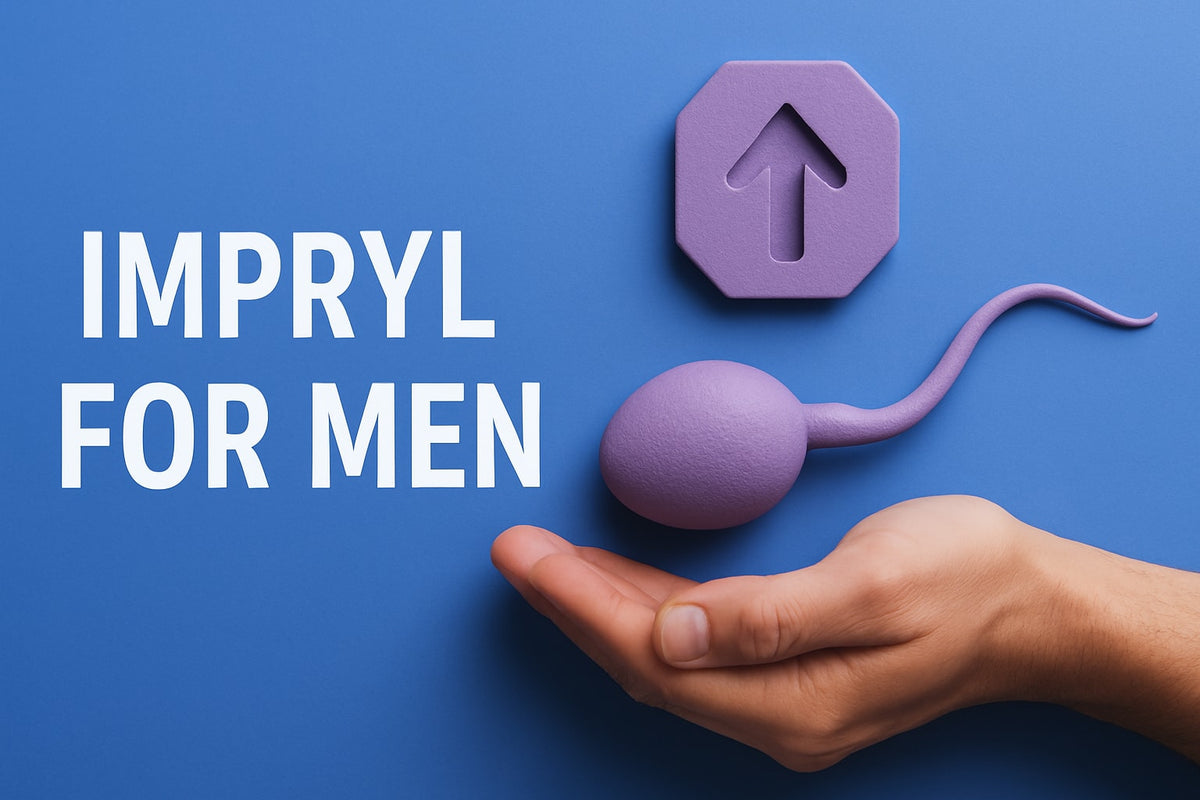
Impryl for Male Fertility: Does It Actually Work?
Impryl is a male fertility supplement that gets a lot of attention in fertility forums and is increasingly recommended by reproductive urologists. Unlike most of the fertility supplement market, Impryl has actual peer-reviewed research behind it, which immediately puts it in a smaller category. But does it work, and is it the right choice?
"Impryl doesn't work the way most male fertility supplements work. Instead of providing antioxidants directly, it's designed to support your body's own antioxidant production, a fundamentally different approach with real research behind it."
What Makes Impryl Different
Most male fertility supplements are antioxidant blends, vitamins C and E, zinc, selenium, CoQ10. These are legitimate nutrients with real relevance to sperm quality. But they address oxidative damage reactively, mopping up free radicals after they've been generated.
Impryl takes a different approach. It's built around activated folate (methylfolate) and a specific combination of compounds designed to support the body's own antioxidant production, particularly through the folate-dependent one-carbon metabolism pathway that regulates methylation and cellular redox balance. The key ingredient is Epigenor (activated methylfolate), combined with vitamin B12, vitamin B6, betaine, and vitamin C.
KEY INSIGHT
Standard antioxidant supplements mop up free radicals after damage occurs. Impryl works upstream, supporting your body's own methylation and antioxidant production systems so the damage is less likely to happen in the first place.
What the Research Shows
Impryl has been studied in randomized controlled trials, which is more than most fertility supplements can say. Studies have shown improvements in sperm DNA fragmentation and IVF outcomes in couples using Impryl for male factor issues.
74 days
One full spermatogenesis cycle, the minimum time Impryl needs to be taken before meaningful sperm quality changes will appear
Sperm DNA fragmentation is the specific outcome most supported by the research. This matters because DNA fragmentation is one of the most underdiagnosed contributors to male factor infertility, standard semen analysis doesn't measure it, and it affects fertilization success, embryo quality, and early pregnancy viability even when standard sperm parameters look normal.
📊 WHAT THE RESEARCH SAYS
Randomized controlled trials on Impryl have demonstrated improvements in sperm DNA fragmentation index (DFI) and IVF outcomes in couples with male factor issues. Sperm DNA fragmentation, not captured by standard semen analysis, is one of the most underdiagnosed contributors to recurrent pregnancy loss and poor IVF results even when standard sperm parameters appear normal.
Who Impryl Is Most Relevant For
Men with elevated DNA fragmentation index (DFI), if he's had this tested and it's high, Impryl is worth serious consideration. Men with unexplained recurrent pregnancy loss where the standard semen analysis was normal. Men with poor IVF fertilization rates despite adequate sperm parameters on standard analysis.
For men whose primary issue is basic antioxidant status and motility, a well-designed antioxidant protocol (zinc, selenium, CoQ10, vitamin E, L-carnitine) may be equally or more relevant depending on the specific deficiencies.
⚠️ IMPORTANT
Impryl is targeted at the methylation and DNA integrity pathway, it is not a comprehensive male fertility protocol. It does not address motility issues primarily driven by mitochondrial dysfunction (CoQ10 is more relevant there), and it does not address testosterone insufficiency. Treating a problem you haven't confirmed exists is a less efficient use of resources than testing first.
✦ KEEP READING
✦ KEEP READING
✦ KEEP READING
Not Sure What Your Body Needs?
Take our free 2-minute quiz and get a personalized supplement protocol built around your specific cycle, hormones, and health signals.
Take the free Score → Explore the App →
The Limitation to Understand
Impryl is designed for the methylation and DNA integrity pathway. It is not a comprehensive male fertility protocol. It doesn't address motility issues primarily driven by mitochondrial dysfunction (CoQ10 is more relevant there). It doesn't address issues primarily driven by testosterone insufficiency. After 26 years in reproductive health and about 10,000 women seen in clinic, I've found that the most effective male fertility protocols are the ones built for the specific man's specific biology, not the most popular supplement on fertility forums.
✦ THE CONCEIVABLE SYSTEM
Personalized Supplements. AI Care Team. The Halo Ring.
Everything your body needs to optimize fertility, built around your information, not someone else's.
Take the free Score → Check Out the App →
Frequently Asked Questions
Does Impryl require a prescription?
No: Impryl is available as a supplement without a prescription in most markets. However, given the cost and the specificity of its indications, I'd recommend having a conversation with a urologist or reproductive specialist about whether DNA fragmentation testing makes sense before committing to it. Treating a problem you haven't confirmed exists is a less efficient use of resources than testing first.
How long does Impryl take to work?
At least 74 days, one full spermatogenesis cycle. The methylation and DNA repair mechanisms Impryl supports operate during sperm development, not after it. Retesting DNA fragmentation at 3 months provides a meaningful data point for whether the intervention is working.
Can Impryl be taken alongside other male fertility supplements?
Generally yes, its mechanism (methylation support) is complementary to antioxidant-based supplements rather than redundant. A combined approach covering both DNA integrity (Impryl) and oxidative stress/motility (CoQ10, selenium, zinc) makes sense for men with multiple issues. Watch for folate overlap if he's also taking a supplement with folic acid or methylfolate separately.
What's the sperm DNA fragmentation test actually like?
A standard sperm DNA fragmentation (DFI) test uses the same semen sample as a regular semen analysis, the test is performed in the lab on the collected sample, not separately. It's typically ordered through a reproductive urologist or fertility clinic. Results are reported as a percentage of fragmented sperm; above 15–25% (threshold varies by lab) is considered elevated and clinically relevant.
Should female partners be tested for anything when male DNA fragmentation is high?
Yes, elevated sperm DNA fragmentation is associated with recurrent pregnancy loss, which means both partners should be evaluated. On the female side, the key questions are whether uterine environment, progesterone sufficiency, and immune factors are optimal, because even with imperfect sperm DNA, pregnancy is sometimes possible if the female-side conditions are maximally supportive. Both partners optimizing simultaneously is always the right approach.
How does the Conceivable system actually work?
Conceivable combines three things: personalized supplement packs built from your quiz results and health data, an AI care team of 7 specialists (led by Kai, your fertility coordinator) who help you understand your pattern and can suggest a pack, and the Halo Ring for continuous biometric tracking. The system is built on published reproductive-health research and 20 years of clinical practice. It starts at $14.99/month.
How do I know which supplements I actually need?
Take the free 2-minute Conceivable quiz. It analyzes your cycle patterns, energy, stress, digestion, and health history to identify the specific nutrients your body needs, not a generic prenatal, but a protocol built for exactly where you are right now.
Do I need the Halo Ring to use Conceivable?
No. The Halo Ring is optional and adds overnight tracking of temperature, HRV and sleep, which Kai uses to help you understand your pattern and suggest a pack. But the personalized supplement packs and AI care team work without it. The ring is a one-time $250 purchase with no subscription required.
Written by Kirsten Karchmer, founder of Conceivable. She has worked in reproductive health for 26 years, including 20 years in clinical practice, and is a former board-certified reproductive acupuncturist (ABORM) and the author of Seeing Red (Simon & Schuster).
Your Report puts your cycle, energy, sleep and symptoms in context, then shows what may be helping, what may be getting in the way, and where to start.
Get my Report, $89 Educational guidance, not a diagnosis.Kai is your AI fertility coordinator, built from 20 years of clinical practice. She can answer your specific questions right now.
Chat with Kai in the app
