


 .
. .
.
How to Take Inositol for Fertility: Dose, Timing, and What to Expect
If you've decided inositol belongs in your fertility protocol, the next questions are practical: how much, which form, when, and what are you actually looking for as evidence it's working. These questions matter because the research on inositol is dose-specific and form-specific, and the difference between a sub-therapeutic dose and a therapeutic one is the difference between "I tried inositol and it didn't work" and actually addressing insulin-related ovarian dysfunction.
"The dose matters. The ratio matters. The form matters. Inositol is one of those supplements where getting the specifics wrong means getting a different outcome than the research shows, even though you're technically 'taking inositol.'"
The Dose
Most studies have used 2 to 4g of myo-inositol a day, often split into a morning and an evening dose. The 2023 international PCOS guideline still calls inositol experimental for fertility, so results may vary (Teede, Hum Reprod 2023).
2 to 4g
Daily myo-inositol dose used in most fertility research, with the D-chiro-inositol component at a 40:1 ratio
D-chiro-inositol should be present at 1/40th of the myo-inositol dose. At 4g myo-inositol, that's 100mg D-chiro-inositol. This 40:1 ratio matches the normal ratio in the blood, and one trial found it worked better than other ratios for restoring ovulation in PCOS (Nordio, 2019). Products that deviate significantly from this ratio may not produce the same outcomes. (Nordio, 2019)
📊 WHAT THE RESEARCH SAYS
One trial found the 40:1 myo-inositol to D-chiro-inositol ratio, which matches the normal plasma ratio, restored ovulation in women with PCOS better than other ratios. Studies using this ratio consistently show improvements in oocyte quality, menstrual regularity, and metabolic markers in women with PCOS, while formulations using higher D-chiro-inositol ratios have actually shown negative effects on egg quality.
Powder vs. Capsules
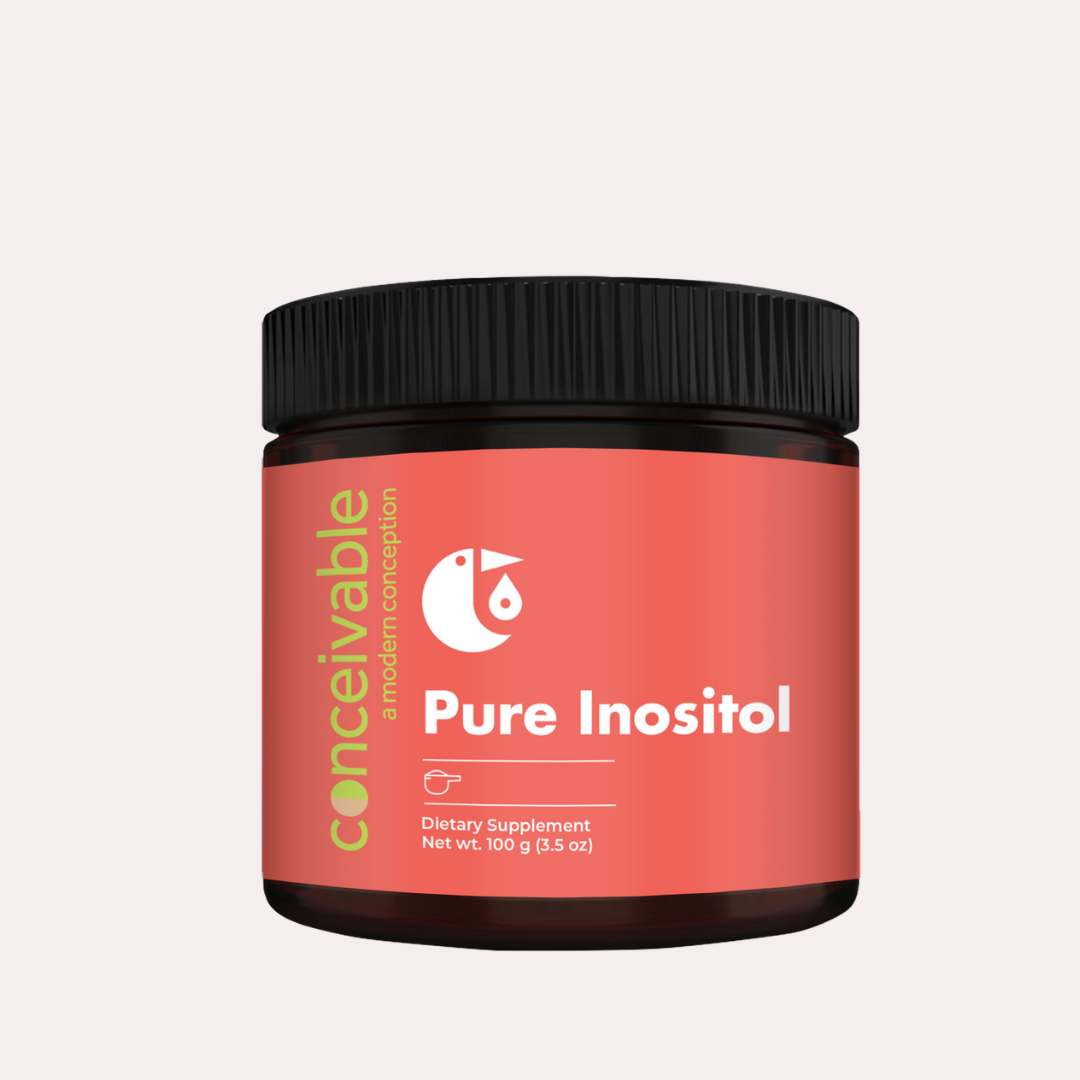
At 4g daily, capsule forms require 4–8 capsules per day depending on product potency. This pill burden is manageable for some women and impractical for others. Powder dissolved in water is often more practical at therapeutic doses and tends to be more cost-effective for the same total dose.
Mix inositol powder in a small amount of water or juice, it dissolves easily and is tasteless. Taking half in the morning and half in the evening maintains steadier blood levels than a single daily dose.
✦ KEEP READING
✦ KEEP READING
Not Sure What Your Body Needs?
Take our free 2-minute quiz and get a personalized supplement protocol built around your specific cycle, hormones, and health signals.
Take the free Score → Explore the App →
Timing
Split the dose: morning and evening. Inositol's effects on insulin receptor signaling are continuous, not pulsatile, maintaining steadier blood levels throughout the day produces more consistent effects than a single large dose. Taking with food is fine; there's no meaningful absorption advantage to taking on an empty stomach.
KEY INSIGHT
Inositol works by supporting cellular signaling pathways that benefit from continuous, steady-state support, not pulsatile dosing. A split morning/evening schedule isn't just convenient; it's how the research was actually conducted and how the mechanism works best.
What to Expect: And When
For women with PCOS or significant insulin resistance: cycle changes (more regular ovulation, shorter cycles if cycles were long) typically begin appearing within 2–3 months. Full regularization often takes 3–6 months. Androgen-related symptoms (acne, hirsutism) may improve within 2–3 months as inositol reduces the hyperandrogenism driven by hyperinsulinemia.
For women without PCOS but with subclinical blood sugar dysregulation: improvements may show up within a couple of months of consistent changes. Downstream effects on cycle regularity take longer, typically 3–4 months.
If you've taken inositol at therapeutic doses for 4+ months with no cycle changes or improvement in glucose patterns, reassess whether blood sugar dysregulation is actually your primary driver, or whether the dose/ratio is correct.
⚠️ IMPORTANT
If you've been taking inositol for 4+ months at therapeutic doses with no visible changes in cycle regularity or glucose patterns, don't assume inositol "doesn't work." First verify your dose and ratio are correct, then reassess whether blood sugar dysregulation is actually your primary fertility driver, you may be targeting the wrong root cause entirely.
The Bigger Picture
Inositol addresses the blood sugar dysregulation underlying factor, one of the five. If blood sugar is your primary driver, it can produce significant results. If your primary issues are inflammation, egg quality, or HPA axis disruption, inositol is less likely to be the answer. After 26 years in reproductive health and about 10,000 women seen in clinic, I've found that identifying the right target matters more than finding the best version of the wrong supplement.
At Conceivable, your inositol protocol (if indicated) is part of a personalized system informed by your cycle, symptoms and labs. Kai helps you understand your pattern and can suggest a pack.
✦ THE CONCEIVABLE SYSTEM
Personalized Supplements. AI Care Team. The Halo Ring.
Everything your body needs to optimize fertility, built around your information, not someone else's.
Take the free Score → Check Out the App →
Frequently Asked Questions
Can I take too much inositol?
Inositol is a naturally occurring compound and is generally well tolerated in studies. The most commonly reported side effect at higher doses is mild GI symptoms (nausea, loose stools), which usually resolve with food or a slight dose reduction. Taking more than the doses used in studies isn't known to work better, so stick to the studied range.
Should I take a break from inositol or cycle it?
No, continuous daily use produces more consistent effects than cycling. Unlike some hormonal interventions, inositol works by supporting cellular signaling pathways that benefit from continuous support rather than pulsatile dosing. Take it daily throughout your pre-conception period and discuss with your OB whether to continue if you conceive.
Does inositol affect pregnancy tests or hormone testing?
No, inositol doesn't interfere with hCG-based pregnancy tests or standard hormone panels. It affects insulin receptor signaling, not the hormone levels that tests measure directly. If you're concerned about interpretation of any test results, let the ordering physician know what supplements you're taking.
Is Conceivable inositol powder different from other brands?
Conceivable's formulation uses the evidence-supported 40:1 myo-inositol to D-chiro-inositol ratio at the research-validated dose, in a powder form designed for practical therapeutic dosing. The differentiation is in matching the formulation to what the clinical research actually used, not in a proprietary ingredient, but in getting the ratio, dose, and form right based on the evidence base.
Can my partner take inositol too?
Yes, inositol has shown some benefits for male fertility, particularly in men with metabolic syndrome or insulin resistance affecting sperm parameters. The research is less extensive than the female fertility data, but the mechanism (improving cellular insulin signaling) is relevant for men as well. For men with significant insulin resistance as a contributing factor to sperm quality, inositol at 2–4g daily is a reasonable addition to his protocol.
How does the Conceivable system actually work?
Conceivable combines three things: personalized supplement packs built from your quiz results and health data, an AI care team of 7 specialists (led by Kai, your fertility coordinator) who help you understand your pattern and can suggest a pack, and the Halo Ring for continuous biometric tracking. The system is built on published reproductive-health research and 20 years of clinical practice. It starts at $14.99/month.
How do I know which supplements I actually need?
Take the free 2-minute Conceivable quiz. It analyzes your cycle patterns, energy, stress, digestion, and health history to identify the specific nutrients your body needs, not a generic prenatal, but a protocol built for exactly where you are right now.
Do I need the Halo Ring to use Conceivable?
No. The Halo Ring is optional and adds overnight tracking of temperature, HRV and sleep, which Kai uses to help you understand your pattern and suggest a pack. But the personalized supplement packs and AI care team work without it. The ring is a one-time $250 purchase with no subscription required.
Written by Kirsten Karchmer, founder of Conceivable. She has worked in reproductive health for 26 years, including 20 years in clinical practice, and is a former board-certified reproductive acupuncturist (ABORM) and the author of Seeing Red (Simon & Schuster).
Sources
Your Report puts your cycle, energy, sleep and symptoms in context, then shows what may be helping, what may be getting in the way, and where to start.
Get my Report, $89 Educational guidance, not a diagnosis.Kai is your AI fertility coordinator, built from 20 years of clinical practice. She can answer your specific questions right now.
Chat with Kai in the app
