


 .
. .
.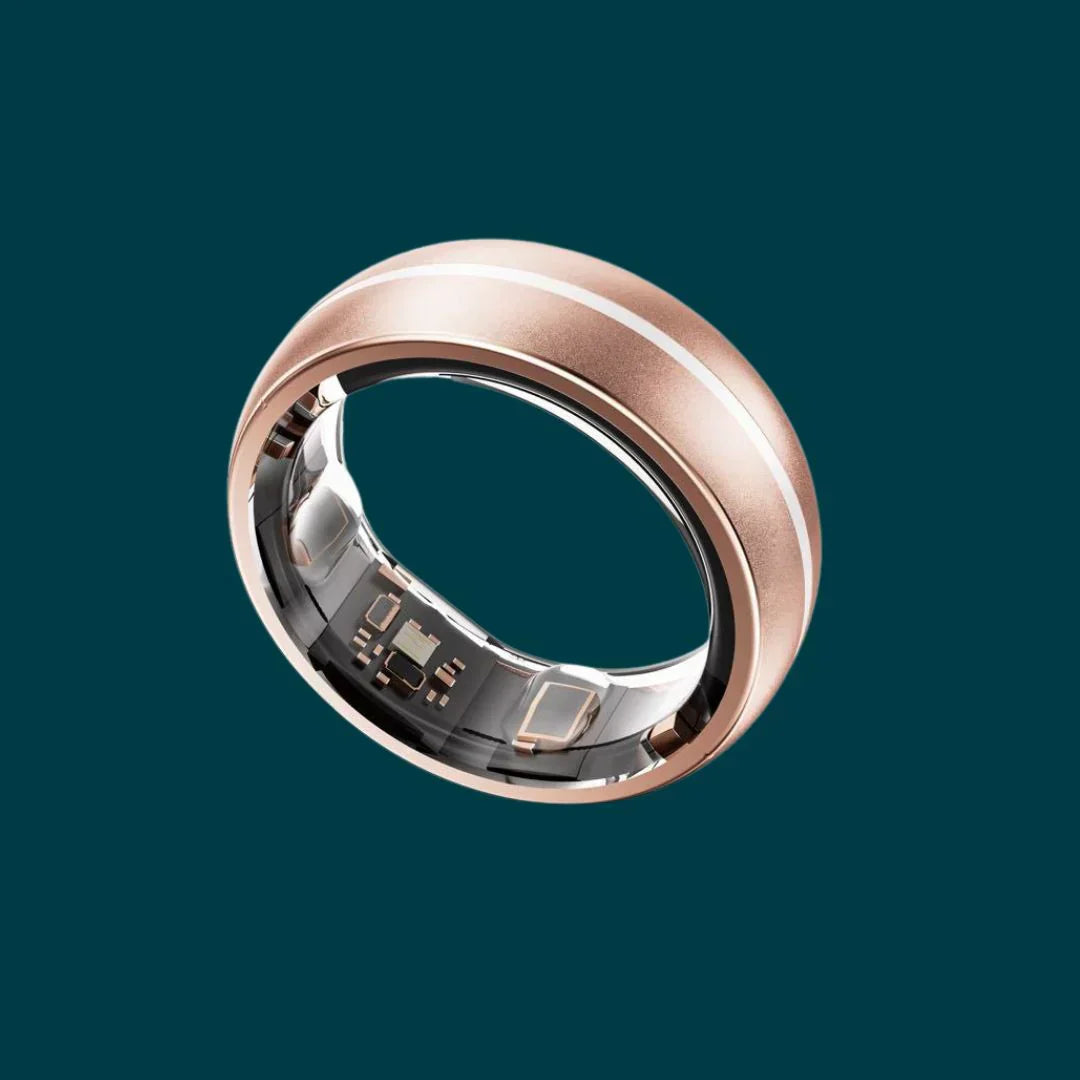
The Halo Ring for Fertility: What It Tracks and Why It Matters
Most fertility tracking devices give you one or two data streams: BBT, or heart rate, or cycle predictions based on that data. The Halo Ring tracks three: skin temperature, heart rate variability and sleep. That's not a gimmick. Those three data streams together tell you things about your fertility that no single-stream device can, and things that a clinic visit, no matter how good your RE is, will never capture.
"A clinic visit captures one frame of your biology. The Halo Ring watches the whole film, and what happens between appointments is often more clinically relevant than what happens during them."
Why Three Data Streams and Not One
Fertility isn't determined by one biological factor. It's determined by the interaction of multiple systems: hormonal, metabolic, immune, neurological. Single-stream tracking tells you about one of those systems. Three streams together tell you about the relationships between them, and those relationships are where the clinically actionable information lives.
BBT alone tells you when you ovulated (retrospectively) and gives you a rough sense of luteal phase length. HRV alone tells you something about your autonomic nervous system load. Sleep alone tells you about recovery and circadian disruption. Together, they reveal patterns that no single stream shows.
KEY INSIGHT
The clinically actionable information isn't in any single data stream, it's in the relationships between them.
What Each Stream Specifically Shows for Fertility
Basal Body Temperature (BBT): The clearest signal of ovulation timing, luteal phase length, and progesterone adequacy. A properly measured, continuous BBT shows you exactly when the thermal shift occurs, how high it goes, and how long it's sustained. Manual BBT tracking misses this because it requires perfect measurement conditions that are rarely achieved. Halo Ring captures it automatically every night.
0.2°F
Minimum BBT rise indicating ovulation, a sustained shift for 12+ days confirms ovulation and gives a proxy for luteal phase progesterone
Heart Rate Variability (HRV): The clearest objective measure of HPA axis load and autonomic nervous system regulation. Declining HRV over days or weeks indicates increasing stress load on the system, even when you feel fine. This is one of the most powerful signals in the Halo Ring data for identifying HPA axis dysregulation before it manifests as cycle disruption.
Continuous Glucose Monitoring: Not measured by the Halo Ring. A continuous glucose monitor or a glucose tolerance test from your doctor shows glucose patterns that a single fasting test can miss. Post-meal spikes and glucose swings can be missed by a single fasting test. A glucose tolerance test or a continuous glucose monitor can show them.
⚠️ IMPORTANT
A woman can have a completely normal fasting glucose and A1C, no diabetes, no pre-diabetes, while still having glucose spikes above 140 mg/dL after meals that are disrupting her insulin signaling and ovarian function. Continuous monitoring is the only way to see this.
Sleep Architecture: Not just hours of sleep, but the quality and structure of sleep, deep sleep percentage, REM duration, wake events, sleep timing consistency. Poor sleep architecture elevates cortisol, disrupts growth hormone, and impairs the hormonal recovery that happens during sleep. These effects compound over weeks and months in ways that aren't obvious from how tired you feel.
✦ KEEP READING
✦ KEEP READING
Not Sure What Your Body Needs?
Take our free 2-minute quiz and get a personalized supplement protocol built around your specific cycle, hormones, and health signals.
Take the free Score → Explore the App →
What 90 Days of Data Shows
After 26 years in reproductive health and about 10,000 women seen in clinic, the patterns I've learned to recognize clinically are the patterns Kai is built to detect in your Halo Ring data. Over 90 days, the data reveals whether your biology is responding to your supplement protocol, not just whether you feel better, but whether HRV is trending upward, overnight temperature patterns are becoming more consistent, sleep architecture is improving. Objective response monitoring, not symptom reporting.
📊 WHAT THE RESEARCH SAYS
Continuous glucose monitoring studies show that post-meal glucose spikes above 140 mg/dL are common even in non-diabetic women and are associated with increased insulin resistance, a key driver of ovulatory dysfunction and impaired oocyte quality. HRV research consistently links lower HRV with elevated cortisol and disrupted HPG axis signaling. Tracking both simultaneously allows for detection of stress-metabolic interactions that neither signal reveals alone.
✦ THE CONCEIVABLE SYSTEM
Personalized Supplements. AI Care Team. The Halo Ring.
Everything your body needs to optimize fertility, built around your information, not someone else's.
Take the free Score → Check Out the App →
Frequently Asked Questions
How is the Halo Ring different from Oura or Apple Watch for fertility?
None of these devices measures glucose. The difference is how Conceivable uses temperature, HRV and sleep alongside your cycle and symptoms. Blood sugar matters for reproductive health, especially with PCOS, and a single fasting test can miss post-meal patterns. Additionally, the Halo Ring data is synthesized by Kai specifically for fertility-relevant pattern detection, not displayed as generic wellness metrics for you to interpret independently. The hardware and the clinical intelligence are designed together for this specific application.
Does the Halo Ring replace ovulation tests (OPKs)?
It doesn't replace OPKs directly: OPKs detect the LH surge that immediately precedes ovulation, which is useful for timing intercourse. The Halo Ring confirms ovulation has occurred through the overnight temperature shift and gives you far more information about the quality and length of your luteal phase than OPKs do. Many women use both: OPKs for real-time fertile window identification, Halo Ring for the broader picture of cycle health and biological optimization progress.
Is the ring comfortable to wear at night?
The Halo Ring is designed specifically for continuous wear including sleep. Like other smart rings, it requires an adjustment period of a few nights for most people. Ring sizing is important for accurate data capture, a properly sized ring should be snug enough to maintain sensor contact without being uncomfortable during sleep.
How much data does the Halo Ring actually capture per day?
The Halo Ring captures continuous data across all four streams throughout the day and night, thousands of individual measurements per 24-hour period. This continuous capture is what allows Kai to identify trends and patterns rather than working from snapshot data points. The raw data volume is substantial; Kai's role is to synthesize it into actionable clinical signals.
What happens to my Halo Ring data if I get pregnant?
Your information history remains available, and the ring continues to be useful during early pregnancy, sleep quality, HRV, and stress load monitoring all remain clinically relevant. The interpretation framework shifts from fertility optimization to early pregnancy support. Discuss any specific concerns about supplement changes or health signals with your OB as you transition from fertility optimization to prenatal care.
How does the Conceivable system actually work?
Conceivable combines three things: personalized supplement packs built from your quiz results and health data, an AI care team of 7 specialists (led by Kai, your fertility coordinator) who help you understand your pattern and can suggest a pack, and the Halo Ring for continuous biometric tracking. The system is built on published reproductive-health research and 20 years of clinical practice. It starts at $14.99/month.
How do I know which supplements I actually need?
Take the free 2-minute Conceivable quiz. It analyzes your cycle patterns, energy, stress, digestion, and health history to identify the specific nutrients your body needs, not a generic prenatal, but a protocol built for exactly where you are right now.
Do I need the Halo Ring to use Conceivable?
No. The Halo Ring is optional and adds overnight tracking of temperature, HRV and sleep, which Kai uses to help you understand your pattern and suggest a pack. But the personalized supplement packs and AI care team work without it. The ring is a one-time $250 purchase with no subscription required.
Written by Kirsten Karchmer, founder of Conceivable. She has worked in reproductive health for 26 years, including 20 years in clinical practice, and is a former board-certified reproductive acupuncturist (ABORM) and the author of Seeing Red (Simon & Schuster).
The Halo Ring reads your overnight temperature, sleep and HRV automatically, the signals this article is about, for $250.00.
Meet the Halo Ring
 Reading this with a cycle of your own? The Halo Ring tracks every signal in this article — $50 off this week with code HALO50.
Shop →
Reading this with a cycle of your own? The Halo Ring tracks every signal in this article — $50 off this week with code HALO50.
Shop →
Kai is your AI fertility coordinator, built from 20 years of clinical practice. She can answer your specific questions right now.
Chat with Kai in the app
