


 .
. .
.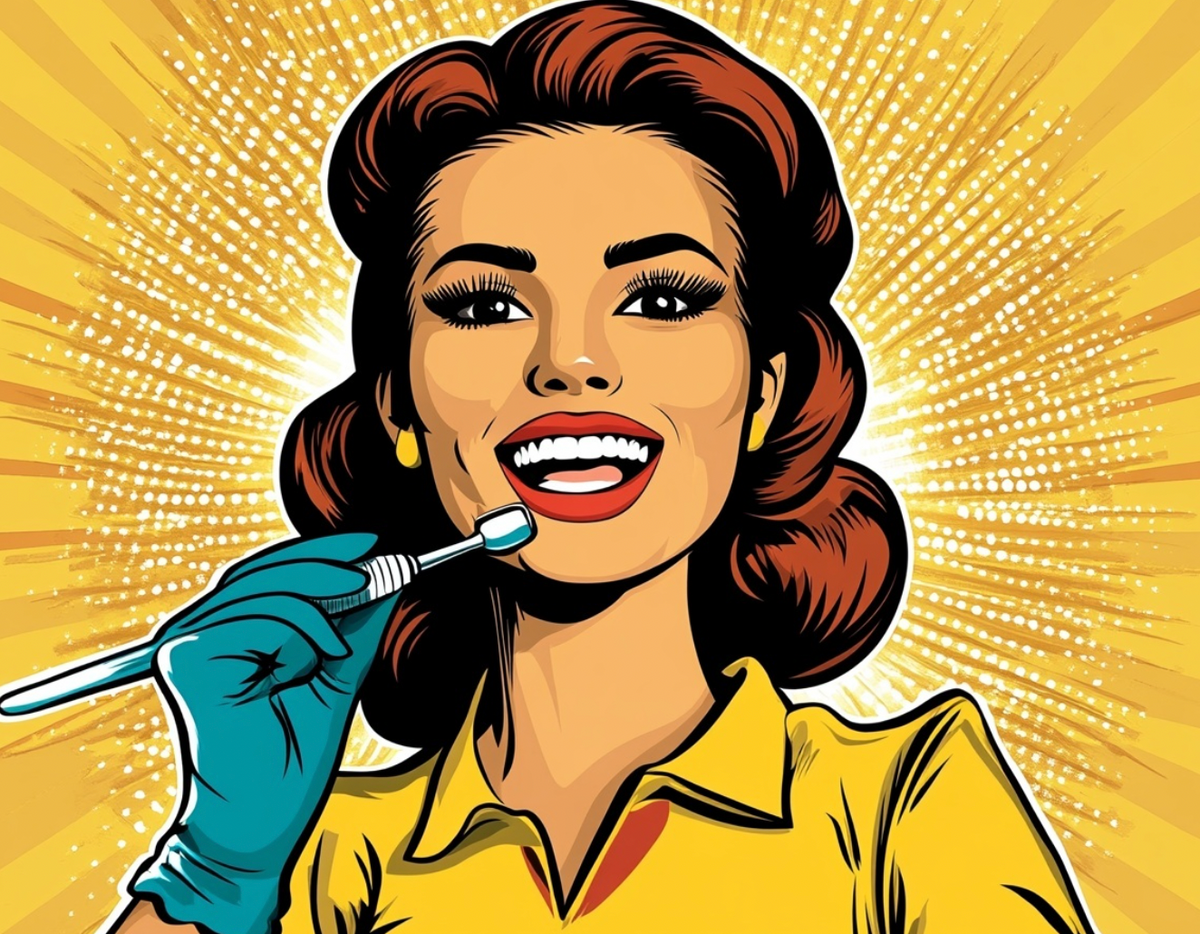
The Dental-Fertility Connection: Why Your Oral Health Affects Your Chances of Conceiving
I know this sounds like an unexpected topic for a fertility article. But after 20 years of working with women who are trying to conceive, I've learned that the connections that seem tangential often turn out to be clinically meaningful. Oral health and fertility is one of them, and the mechanism isn't mystical. It runs directly through the systemic inflammation pathway that I consider one of the five most important underlying factors in unexplained infertility.
"Periodontal disease is systemic inflammation with an oral entry point. And systemic inflammation is one of the most underdiagnosed factors affecting uterine receptivity and early pregnancy viability."
The Inflammation Mechanism
Periodontal disease, chronic gum inflammation and infection, is not just a local problem in your mouth. It's a source of systemic bacteremia (bacteria in the bloodstream) and elevated systemic inflammatory markers. The same inflammatory pathways activated by gum disease, elevated IL-6, CRP, TNF-alpha, are the pathways that interfere with implantation and early pregnancy maintenance when chronically elevated.
Subclinical systemic inflammation is one of the five underlying factors I see most consistently in unexplained infertility. Most of my patients don't know they have elevated inflammatory tone, it doesn't cause obvious symptoms. But it creates a uterine environment that's hostile to implantation regardless of embryo quality. And for some of these women, one of the primary drivers of that inflammation is periodontal disease that hasn't been fully treated.
KEY INSIGHT
Most patients with elevated inflammatory tone don't know they have it, it doesn't cause obvious symptoms. But it creates a uterine environment that's hostile to implantation regardless of embryo quality. Periodontal disease is one of the most overlooked drivers.
What the Research Shows
Studies have found associations between periodontal disease and longer time to conception in women trying to conceive naturally. Research has also found associations between periodontal disease during pregnancy and adverse outcomes including preterm birth and low birth weight, outcomes that share inflammatory mechanisms with implantation failure.
7 months
Longer average time to conception in women with periodontal disease vs. without, in a study of 3,737 women. A meaningful difference for a modifiable factor.
This isn't a causal claim in either direction, association studies can't establish that treating gum disease will shorten your time to conception. But the mechanism is plausible and the intervention is straightforward: good oral health is worth pursuing for your overall health regardless, and it may be reducing a source of systemic inflammation that's affecting your fertility.
📊 WHAT THE RESEARCH SAYS
Periodontal pathogens including Porphyromonas gingivalis and Fusobacterium nucleatum have been found in reproductive tissues, suggesting systemic spread well beyond the mouth. Studies on periodontal treatment also show measurable reductions in systemic inflammatory markers (CRP, IL-6) within 1–3 months of completing treatment, consistent with the 90-day optimization window used in pre-conception protocols.
✦ KEEP READING
- Infertility and Stress: Why 'Just Relax' Is Bad Advice, and What Actually Helps →
- Sleep and Fertility: Why Poor Sleep Might Be the Hidden Reason You're Not Getting Pregnant →
- Fertility and Skincare: The Ingredients in Your Products That Could Be Affecting Your Hormones →
- "10 Creative Ways to Unwind After Work Without Alcohol" →
✦ KEEP READING
- Infertility and Stress: Why 'Just Relax' Is Bad Advice, and What Actually Helps →
- Sleep and Fertility: Why Poor Sleep Might Be the Hidden Reason You're Not Getting Pregnant →
- Fertility and Skincare: The Ingredients in Your Products That Could Be Affecting Your Hormones →
- "10 Creative Ways to Unwind After Work Without Alcohol" →
Not Sure What Your Body Needs?
Take our free 2-minute quiz and get a personalized supplement protocol built around your specific cycle, hormones, and health signals, including inflammation.
Take the free Score → Explore the App →
What This Means Practically
Before or during your pre-conception optimization period, see your dentist. Get a cleaning and a periodontal evaluation. If there's active gum disease, treat it, not just for your teeth but as part of your fertility optimization protocol. This is a low-cost, low-risk intervention with potential systemic benefit.
⚠️ IMPORTANT
Pre-Conception Dental Checklist: Full cleaning and periodontal evaluation; treatment of any active cavities or gum disease; X-rays if needed (time them to the first half of your cycle, before ovulation, or during a cycle when you're not actively trying). Then maintain with regular cleanings every 6 months. If dental infection is present, treatment takes priority over radiation avoidance concerns.
Good oral hygiene practices, twice-daily brushing, daily flossing, minimizing sugary foods, reduce bacterial load and gingival inflammation on an ongoing basis. These aren't fertility-specific recommendations; they're general health recommendations that happen to have systemic anti-inflammatory benefits.
Where This Fits in the Bigger Picture
The dental connection is one example of something I try to communicate consistently: systemic inflammation has many entry points, and addressing fertility requires looking at all of them. Diet, sleep, stress, gut health, oral health, these all feed into the same systemic inflammatory picture that determines your uterine environment.
At Conceivable, your Halo Ring HRV data gives us continuous signal on systemic inflammatory tone. If your HRV is trending down and inflammation-related patterns are present, we look at all contributing factors, not just the obvious ones. Kai synthesizes the data and helps identify where intervention is most needed. Sometimes the answer includes things your fertility clinic would never mention.
✦ THE CONCEIVABLE SYSTEM
Personalized Supplements. AI Care Team. The Halo Ring.
Everything your body needs to optimize fertility, built around your information, not someone else's.
Take the free Score → Check Out the App →
Frequently Asked Questions
Is there a specific type of dental treatment that matters most for fertility?
Periodontal treatment, treating active gum disease through scaling, root planing, and infection management, is the most directly relevant. A routine cleaning is a good starting point and allows your dentist to assess whether active periodontal disease is present. If it is, full periodontal treatment is more important than routine prophylaxis for the systemic inflammation reduction you're looking for.
Can dental X-rays affect fertility or early pregnancy?
The radiation exposure from dental X-rays is very low, orders of magnitude lower than CT scans or other medical imaging. Standard precautions (lead apron) further reduce the minimal exposure. If you're actively trying to conceive and concerned about timing, it's reasonable to schedule X-rays during the first half of your cycle (before ovulation) or during a cycle when you're not actively trying. If dental infection is present, treatment takes priority over radiation avoidance concerns.
Does the oral microbiome affect fertility the same way the gut microbiome does?
Through the same pathway, systemic inflammation. The oral microbiome, gut microbiome, and vaginal microbiome are interconnected. Disruption in one tends to affect the others. Periodontal pathogens (Porphyromonas gingivalis, Fusobacterium nucleatum) have been found in reproductive tissues, suggesting systemic spread beyond the mouth. The full clinical implications are still being researched, but the inflammatory mechanism is well established.
Should I tell my RE about my dental history?
Yes, particularly if you have a history of periodontal disease. Your RE's intake process may not ask about oral health, but it's relevant clinical information. If you're doing a recurrent implantation failure workup and systemic inflammation is suspected, your dental status is part of that picture.
How quickly does treating gum disease reduce systemic inflammation?
Studies on periodontal treatment show reductions in systemic inflammatory markers (CRP, IL-6) within 1–3 months of treatment. This is consistent with the 90-day optimization window, treating active gum disease in the months before a conception attempt or IVF cycle gives the inflammation reduction time to manifest systemically before the attempt.
How does the Conceivable system actually work?
Conceivable combines three things: personalized supplement packs built from your quiz results and health data, an AI care team of 7 specialists (led by Kai, your fertility coordinator) who help you understand your pattern and can suggest a pack, and the Halo Ring for continuous biometric tracking. The system is built on published reproductive-health research and 20 years of clinical practice. It starts at $14.99/month.
How do I know which supplements I actually need?
Take the free 2-minute Conceivable quiz. It analyzes your cycle patterns, energy, stress, digestion, and health history to identify the specific nutrients your body needs, not a generic prenatal, but a protocol built for exactly where you are right now.
Do I need the Halo Ring to use Conceivable?
No. The Halo Ring is optional and adds overnight tracking of temperature, HRV and sleep, which Kai uses to help you understand your pattern and suggest a pack. But the personalized supplement packs and AI care team work without it. The ring is a one-time $250 purchase with no subscription required.
Written by Kirsten Karchmer, founder of Conceivable. She has worked in reproductive health for 26 years, including 20 years in clinical practice, and is a former board-certified reproductive acupuncturist (ABORM) and the author of Seeing Red (Simon & Schuster).
Your Report puts your cycle, energy, sleep and symptoms in context, then shows what may be helping, what may be getting in the way, and where to start.
Get my Report, $89 Educational guidance, not a diagnosis.Kai is your AI fertility coordinator, built from 20 years of clinical practice. She can answer your specific questions right now.
Chat with Kai in the app
