


 .
. .
.
How to Identify Fertility Issues Using AI and Wearables
Fertility tracking has historically been limited to what can be observed directly, basal body temperature, cervical mucus changes, and ovulation predictor kits. Wearable devices and AI-powered pattern analysis have changed what's possible, enabling continuous physiological monitoring that surfaces patterns invisible to manual tracking. The question isn't whether technology can help identify fertility issues, it clearly can, but rather what it's actually measuring and what that data means clinically.
What Wearables Actually Measure
Consumer wearables relevant to fertility primarily track resting heart rate, heart rate variability (HRV), skin temperature, respiratory rate, and sleep architecture. These are indirect markers, they don't measure hormones, follicle size, or endometrial thickness directly. What they do measure is the downstream physiological expression of hormonal and metabolic status. Temperature shifts at ovulation are detectable and consistent; HRV changes reflect autonomic nervous system tone, which is closely linked to cortisol and stress hormones; sleep disruption correlates with inflammatory and hormonal dysregulation.
Devices like the Oura Ring and WHOOP have validated their cycle tracking algorithms against gold-standard hormonal testing in published studies, showing meaningful accuracy in identifying fertile windows and ovulation timing from temperature and physiological variability data alone. They are not clinical diagnostic tools, but they are significantly better than calendar-based methods for identifying ovulation windows and detecting cycle irregularities.
KEY INSIGHT
Wearables don't measure hormones directly, they measure the downstream physiological expression of hormonal and metabolic status. That distinction matters enormously for interpreting what your information actually means.
How AI Improves Interpretation
The raw data from wearables is most useful when interpreted across time and in context. AI pattern recognition identifies trends that are difficult to see manually, gradual changes in luteal phase temperature patterns, subtle but consistent HRV suppression in the days before menstruation, or slow drift in cycle length that might indicate emerging hormonal changes. These signals, individually small, can collectively indicate patterns consistent with luteal phase deficiency, subclinical thyroid dysfunction, or HPA axis dysregulation before those conditions become clinically obvious.
AI systems that integrate multiple data streams, including cycle tracking, symptom logging, sleep data, and activity, can surface correlations that neither the user nor a single-metric tracker would identify. The clinical value is in early detection: identifying a pattern that warrants investigation before it becomes a diagnosis, rather than after months or years of unexplained difficulty.
3+
Consecutive cycles of consistent wearable data are typically needed before patterns become specific enough to guide clinical investigation
✦ KEEP READING
✦ KEEP READING
✦ KEEP READING
Not Sure What Your Body Needs?
Take our free 2-minute quiz and get a personalized supplement protocol built around your specific cycle, hormones, and health signals.
Take the free Score → Explore the App →
Specific Patterns Wearables Can Help Identify
Consistently low resting temperature or poor temperature rise after ovulation can indicate progesterone deficiency or low thyroid function. Shortened cycles (confirmed by consecutive tracking) suggest either early ovulation, short follicular phase, or luteal phase inadequacy. Absent temperature rise across multiple cycles indicates anovulation. Highly variable cycle length with no clear pattern suggests irregular hormonal stimulation consistent with PCOS or stress-related disruption. Persistent low HRV during the luteal phase suggests elevated cortisol, which competes with progesterone and can disrupt implantation.
"Persistent low HRV during the luteal phase suggests elevated cortisol, which competes with progesterone and can disrupt implantation."
What Wearables Cannot Tell You
Wearable data identifies physiological patterns, it cannot diagnose them. A temperature pattern consistent with low progesterone still requires a Day 21 blood progesterone test to confirm. Signs consistent with anovulation require ultrasound or serial bloodwork to verify. Patterns that suggest thyroid issues require a full thyroid panel including TSH, free T3, and T4 to act on. The appropriate use of wearable data is as an investigative guide, a way to arrive at clinical evaluation with better, more specific questions, rather than as a substitute for hormonal testing.
⚠️ IMPORTANT
Wearable data is an investigative guide, not a diagnostic tool. Never use wearable patterns alone to self-diagnose a fertility condition or make treatment decisions. Bring your information to a clinician who can order the appropriate confirmatory tests.
Building a Useful Monitoring Protocol
The most effective approach combines wearable tracking with manual cycle observation. Temperature data from a wearable or dedicated BBT thermometer confirms ovulation timing. Cervical mucus observation identifies the fertile window more accurately than temperature alone. Symptom logging throughout the cycle identifies patterns, energy, mood, cramping, bloating, that correlate with specific hormonal phases and flag deviations. When consistent patterns appear over three or more cycles, the data becomes actionable and specific enough to guide clinical investigation.
📊 WHAT THE RESEARCH SAYS
Published validation studies for devices like the Oura Ring have demonstrated meaningful accuracy in identifying ovulation timing from skin temperature and physiological variability data alone, significantly outperforming calendar-based methods for detecting fertile windows and cycle irregularities. AI systems that integrate multiple data streams, cycle data, symptom logs, sleep, and activity, surface correlations no single-metric tracker could identify on its own.
✦ THE CONCEIVABLE SYSTEM
Personalized Supplements. AI Care Team. The Halo Ring.
Everything your body needs to optimize fertility, built around your information, not someone else's.
Take the free Score → Check Out the App →
Frequently Asked Questions
Can a wearable replace clinical fertility testing?
No. Wearables surface physiological patterns that can guide investigation, but they cannot confirm diagnoses. A temperature pattern suggesting low progesterone still requires a Day 21 blood test. Signs of anovulation need ultrasound or serial bloodwork to verify. Think of wearable data as a way to arrive at your clinical appointment with better, more specific questions, not as a substitute for hormonal testing.
Which wearable patterns are most clinically meaningful for fertility?
The most actionable signals include: absent or blunted temperature rise after ovulation (suggesting progesterone deficiency or thyroid issues), consistently variable cycle length (consistent with PCOS or stress-related disruption), and persistent low HRV during the luteal phase (suggesting elevated cortisol competing with progesterone). These patterns become reliable when confirmed across three or more consecutive cycles.
How does the Conceivable system actually work?
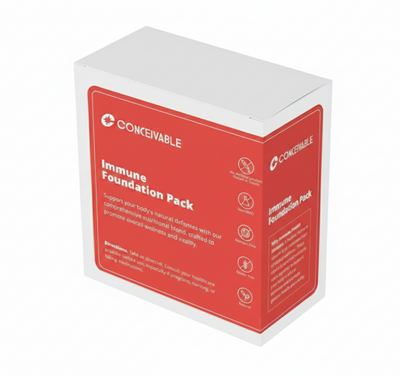
Conceivable combines three things: personalized supplement packs built from your quiz results and health data, an AI care team of 7 specialists (led by Kai, your fertility coordinator) who help you understand your pattern and can suggest a pack, and the Halo Ring for continuous biometric tracking. The system is built on published reproductive-health research and 20 years of clinical practice. It starts at $14.99/month.
How do I know which supplements I actually need?
Take the free 2-minute Conceivable quiz. It analyzes your cycle patterns, energy, stress, digestion, and health history to identify the specific nutrients your body needs, not a generic prenatal, but a protocol built for exactly where you are right now.
Do I need the Halo Ring to use Conceivable?
No. The Halo Ring is optional and adds overnight tracking of temperature, HRV and sleep, which Kai uses to help you understand your pattern and suggest a pack. But the personalized supplement packs and AI care team work without it. The ring is a one-time $250 purchase with no subscription required.
Written by Kirsten Karchmer, founder of Conceivable. She has worked in reproductive health for 26 years, including 20 years in clinical practice, and is a former board-certified reproductive acupuncturist (ABORM) and the author of Seeing Red (Simon & Schuster).
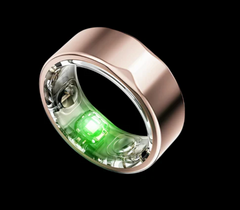
The Halo Ring reads your overnight temperature, sleep and HRV automatically, the signals this article is about, for $250.00.
Meet the Halo RingKai is your AI fertility coordinator, built from 20 years of clinical practice. She can answer your specific questions right now.
Chat with Kai in the app
