


 .
. .
.
Oura Ring vs. Halo Ring for Fertility: What's the Actual Difference?
If you're researching wearables for fertility tracking, you've probably encountered both the Oura Ring and Conceivable's Halo Ring. They're both smart rings. They both track sleep and heart rate variability. On the surface, they might look similar. They're not, and the differences matter significantly for fertility-specific applications.
"The Oura Ring is an excellent general wellness device. The Halo Ring is a fertility-specific biological monitoring tool. These are different products built for different jobs, and using the wrong one is like using a good general-purpose thermometer when you need a BBT thermometer designed for the specific precision fertility tracking requires."
What the Oura Ring Does Well
The Oura Ring is a genuinely good product. Its sleep tracking is among the best available in a wearable form factor. Its HRV measurement methodology is sound. The readiness and sleep scores it produces give useful daily feedback for general wellness and recovery optimization. For athletes, biohackers, and people interested in general health optimization, it's a solid device.
For fertility tracking, some women use the Oura Ring's temperature data to identify their fertile window: Oura detects the BBT shift associated with ovulation and flags it on the app. This is a real and useful feature for cycle tracking purposes.
Where Oura Falls Short for Fertility
Neither ring measures glucose. The difference is what happens with the data: Conceivable uses your temperature, HRV and sleep alongside your cycle and symptoms. This is not a minor omission for fertility purposes.
Blood sugar dysregulation is one of the five underlying factors I consider most important in unexplained infertility. It shows up as glucose volatility, spikes and crashes, that disrupt insulin receptor signaling in the ovary and affect hormonal balance in ways that no standard test captures. You can have a completely normal fasting glucose, a normal A1C, and a normal two-hour glucose tolerance test and still have post-meal spikes above 140 mg/dL that are meaningfully affecting your fertility. A continuous glucose monitor or a glucose tolerance test can show this. Oura doesn't provide it.
⚠️ IMPORTANT
Standard fertility bloodwork, including fasting glucose, A1C, and even a two-hour glucose tolerance test, will not detect the post-meal glucose spikes that can disrupt ovarian hormone signaling. Continuous monitoring is the only way to see this pattern.
The second gap: Oura's data is not integrated with a fertility-specific clinical interpretation system. It gives you raw wellness data and general readiness scores. It doesn't synthesize four data streams specifically for fertility-relevant pattern detection, and it doesn't connect to a coach that helps you understand your pattern and can suggest a pack.
✦ KEEP READING
✦ KEEP READING
Not Sure What Your Body Needs?
Take our free 2-minute quiz and get a personalized supplement protocol built around your specific cycle, hormones, and health signals.
Take the free Score → Explore the App →
What the Halo Ring Adds
Overnight temperature, HRV and sleep data that add context to your cycle and symptoms.
Fertility-specific data synthesis by Kai, your overnight temperature, HRV and sleep data are interpreted together through a clinical pattern recognition framework, not displayed as isolated wellness metrics.
KEY INSIGHT
A device that shows you data is a monitoring tool. A device whose data is synthesized by a clinical AI coordinator and connected to a personalized supplement protocol is a system. These are fundamentally different things.
Protocol integration: Halo Ring data feeds Kai, which helps you understand your pattern and can suggest a pack. Oura data doesn't connect to anything that changes your treatment.
📊 WHAT THE RESEARCH SAYS
Glucose volatility, not just average glucose, is an independent predictor of ovarian dysfunction. Post-meal spikes above 140 mg/dL have been associated with disrupted insulin receptor signaling in ovarian tissue, even in women who test normal on standard metabolic panels. A continuous glucose monitor (a separate device) is the most direct way to capture this pattern in daily life.
The Right Tool for the Right Job
If you're primarily interested in sleep tracking and general wellness, Oura is excellent. If you're using a wearable specifically to optimize your fertility, to identify biological drivers, monitor your response to a supplement protocol, and get continuous insight into the factors that determine whether you'll conceive, the Halo Ring is built for that job in a way that Oura isn't.
✦ THE CONCEIVABLE SYSTEM
Personalized Supplements. AI Care Team. The Halo Ring.
Everything your body needs to optimize fertility, built around your information, not someone else's.
Take the free Score → Check Out the App →
Frequently Asked Questions
Can I use my existing Oura Ring data with the Conceivable system?
Currently the Conceivable system is built around the Halo Ring's specific data streams: temperature, HRV and sleep. Oura data can be useful context, but it can't substitute for the four-stream integration that Kai is built to synthesize.
Is the Halo Ring comfortable enough to wear every night?
Like all smart rings, there's an adjustment period. Ring sizing matters significantly for comfort and data accuracy, a properly sized Halo Ring should be snug enough to maintain sensor contact without being uncomfortable during sleep. Most users adjust within a week of nightly wear.
Does the Halo Ring measure glucose?
No. The Halo Ring tracks temperature, heart rate variability and sleep. If you want to see your glucose patterns, a continuous glucose monitor (a separate device) or an oral glucose tolerance test from your doctor is the direct way to do it.
Does the Halo Ring work for men too?
Yes. HRV and sleep data are relevant for men in the fertility context. Testosterone production is significantly affected by sleep quality and HRV trends. Both partners can use the Halo Ring and both can receive personalized protocols from Kai based on their data.
What happens to the Halo Ring data if I get pregnant?
The data and the ring remain useful through early pregnancy, sleep, HRV and temperature tracking remain useful context during the first trimester. The interpretation framework shifts from fertility optimization to early pregnancy support, and Kai's recommendations evolve accordingly. Discuss any specific concerns with your OB as you transition from fertility optimization to prenatal care.
How does the Conceivable system actually work?
Conceivable combines three things: personalized supplement packs built from your quiz results and health data, an AI care team of 7 specialists (led by Kai, your fertility coordinator) who help you understand your pattern and can suggest a pack, and the Halo Ring for continuous biometric tracking. The system is built on published reproductive-health research and 20 years of clinical practice. It starts at $14.99/month.
How do I know which supplements I actually need?
Take the free 2-minute Conceivable quiz. It analyzes your cycle patterns, energy, stress, digestion, and health history to identify the specific nutrients your body needs, not a generic prenatal, but a protocol built for exactly where you are right now.
Do I need the Halo Ring to use Conceivable?
No. The Halo Ring is optional and adds overnight tracking of temperature, HRV and sleep, which Kai uses to help you understand your pattern and suggest a pack. But the personalized supplement packs and AI care team work without it. The ring is a one-time $250 purchase with no subscription required.
Written by Kirsten Karchmer, founder of Conceivable. She has worked in reproductive health for 26 years, including 20 years in clinical practice, and is a former board-certified reproductive acupuncturist (ABORM) and the author of Seeing Red (Simon & Schuster).
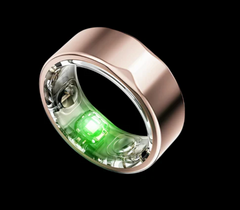
The Halo Ring reads your overnight temperature, sleep and HRV automatically, the signals this article is about, for $250.00.
Meet the Halo Ring
 Reading this with a cycle of your own? The Halo Ring tracks every signal in this article — $50 off this week with code HALO50.
Shop →
Reading this with a cycle of your own? The Halo Ring tracks every signal in this article — $50 off this week with code HALO50.
Shop →
Kai is your AI fertility coordinator, built from 20 years of clinical practice. She can answer your specific questions right now.
Chat with Kai in the app
