
Ai Ivf Guide 2026: Unlocking The Future Of Fertility

Imagine a world where starting a family is less about stress and uncertainty and more about hope. For many, IVF brings emotional highs and lows, with financial worries and unpredictable outcomes. That’s where ai ivf steps in, changing the game for families and fertility experts.
In this guide, you’ll discover how ai ivf is making fertility treatments in 2026 more accurate, accessible, and successful. We’ll walk through the journey from early IVF days to today’s breakthroughs, share real stories, and peek into the future. Ready to see how AI could transform your path to parenthood? Let’s dive in.
The Evolution of IVF: From Manual to Machine Learning
Imagine trying to start a family and facing a medical maze that feels both hopeful and overwhelming. IVF has been a game changer for millions, but for decades, the process was painstakingly manual. Now, the story is changing, and ai ivf is at the center of this revolution.

The Traditional IVF Process: Steps and Challenges
Let’s break down how IVF used to work. The journey typically included:
- Ovarian stimulation using hormone medications
- Egg retrieval through a minor surgical procedure
- Fertilization of eggs with sperm in the lab
- Embryo culture and monitoring for several days
- Embryo selection and transfer into the uterus
Each step came with emotional and financial stress. The average success rate hovered around 50 percent per cycle, meaning most couples needed multiple tries. Globally, over 10 million babies have been born via IVF since 1978, and in the U.S., about 2 percent of infants arrive this way.
But here’s the catch: much of the process relied on human judgment. Embryologists graded embryos by eye, a subjective and time-consuming task. Fatigue and bias could creep in. Manual data entry and handling increased the risk of errors. The process required expensive equipment and highly trained staff, making it less accessible for families in rural or low-resource areas.
The pain points stacked up quickly:
- High costs per cycle, often not covered by insurance
- Emotional rollercoasters from repeated failures
- Long wait times and travel for specialized clinics
- Limited access for many due to geography or finances
With so many barriers, the world was more than ready for ai ivf to shake things up.
The Rise of AI in Fertility Medicine
Change started picking up speed in the early 2020s. As big data and imaging technology exploded, fertility medicine saw the potential of machine learning. Early proof-of-concept studies showed that ai ivf could automate embryo grading, sperm selection, and even predict outcomes more accurately than humans.
Key drivers behind the shift included:
- Advances in digital microscopy and imaging
- Growth of massive IVF datasets for machine learning
- Improved algorithms for pattern recognition and prediction
The promise? Increased accuracy, efficiency, and accessibility for everyone. Clinics began piloting AI-driven embryo selection, reducing the subjectivity and fatigue that plagued manual grading. Systems like AI-powered sperm tracking transformed lab workflows, finding healthy sperm in minutes instead of hours.
For those hungry for more detail, Advances in fertility science provides an in-depth look at the scientific innovations fueling this transformation. As ai ivf continues to evolve, families and clinicians alike are witnessing a new era where technology meets hope—making fertility journeys smarter, faster, and more successful.
How AI is Transforming IVF in 2026: A Step-by-Step Guide
Picture yourself walking into an IVF clinic in 2026. The air is buzzing with quiet confidence, not anxiety. Why? Because AI ivf has changed the game. From the very first appointment, artificial intelligence steps in as your silent, super-smart partner, guiding every decision, reducing human error, and unlocking possibilities that were once pure science fiction.

Step 1: AI-Powered Sperm Selection
Sperm selection is the unsung hero of every IVF journey. In the past, embryologists spent hours peering through microscopes, hoping to spot the healthiest sperm. Now, AI ivf systems like STAR at Columbia University are flipping the script.
These AI tools scan thousands of sperm in minutes, using computer vision to spot the most motile and structurally perfect candidates—even ones invisible to the human eye. Imagine going from days of guesswork to near-instant precision. For couples facing severe male infertility, AI ivf has transformed heartbreak into hope, leading to success stories like the first U.S. baby born after 15 failed cycles.
Let’s break it down:
| Traditional Sperm Selection | AI-Powered Sperm Selection |
|---|---|
| Hours of manual searching | Analysis in minutes |
| Human fatigue, subjectivity | Consistent, objective picks |
| Limited by eyesight | Finds hidden, viable sperm |
With AI ivf, the odds are better and the process less stressful.
Step 2: AI-Driven Egg Assessment and Retrieval
Egg quality is a make-or-break factor in IVF, but it’s always been tricky to judge. Enter AI ivf, with machine learning models trained to predict ovarian response and evaluate egg health with new accuracy.
Robotic arms, guided by AI, can now assist with egg retrieval, reducing the risk of damage and optimizing timing. These systems analyze hormone levels and ultrasound images, adjusting protocols in real time. Early research shows that this approach personalizes hormone dosing and retrieval timing, minimizing side effects and maximizing the number of healthy eggs.
Patients benefit from fewer complications and higher-quality eggs. By letting AI ivf handle the delicate details, clinics are seeing improved outcomes—especially for women with poor ovarian reserve.
Step 3: Embryo Grading and Selection with AI
Traditionally, grading embryos was a slow, subjective process. Embryologists relied on visual cues, which varied from person to person. Now, AI ivf platforms like BELA analyze over 100,000 embryo images, spotting subtle differences and predicting chromosomal status with 70-80% accuracy.
This non-invasive image analysis reduces the need for risky biopsies. According to a study on AI in predicting live birth success, these systems can forecast which embryos are most likely to result in a healthy baby, nearly matching expert human accuracy. The result? Higher success rates, fewer cycles, and less heartbreak.
AI ivf doesn’t just speed up the process—it levels the playing field, giving every patient access to the sharpest embryo selection tools available.
Step 4: AI-Assisted Genetic Testing and Chromosomal Analysis
Genetic testing, or PGT-A, has long been a double-edged sword in IVF. While it helps identify healthy embryos, the traditional biopsy method carries risks. Now, AI ivf is changing that equation.
Machine learning models analyze time-lapse images and other non-invasive markers to predict chromosomal abnormalities like aneuploidy and mosaicism. This means safer, faster assessments and more embryos left intact for transfer. Clinics are seeing fewer failed transfers and more healthy pregnancies, especially in tough cases where genetic issues are suspected.
AI ivf gives patients peace of mind, knowing their embryos are screened with the latest technology—no extra stress or risk required.
Step 5: AI in Embryo Tracking, Labeling, and Transfer
Ever worry about mix-ups in the lab? AI ivf has your back here, too. Advanced tracking systems monitor every embryo from fertilization to transfer, confirming identity at every step. Robotics and AI now automate over 200 lab steps, keeping samples safe and secure.
Real-world data shows over 20 live births from clinics using fully automated, AI-guided IVF. This means fewer errors, more confidence, and a smoother experience for everyone involved.
With AI ivf, the journey is safer, more reliable, and ultimately, more hopeful for families everywhere.
Breakthroughs and Innovations: Real-World Success Stories
The world of ai ivf is turning dreams into reality for families who once faced impossible odds. From record-breaking births to game-changing accessibility, these breakthroughs are rewriting the future of fertility. Let’s dive into the stories, clinics, and real-life results that prove ai ivf is more than hype—it’s hope.
Landmark AI IVF Births and Clinical Milestones
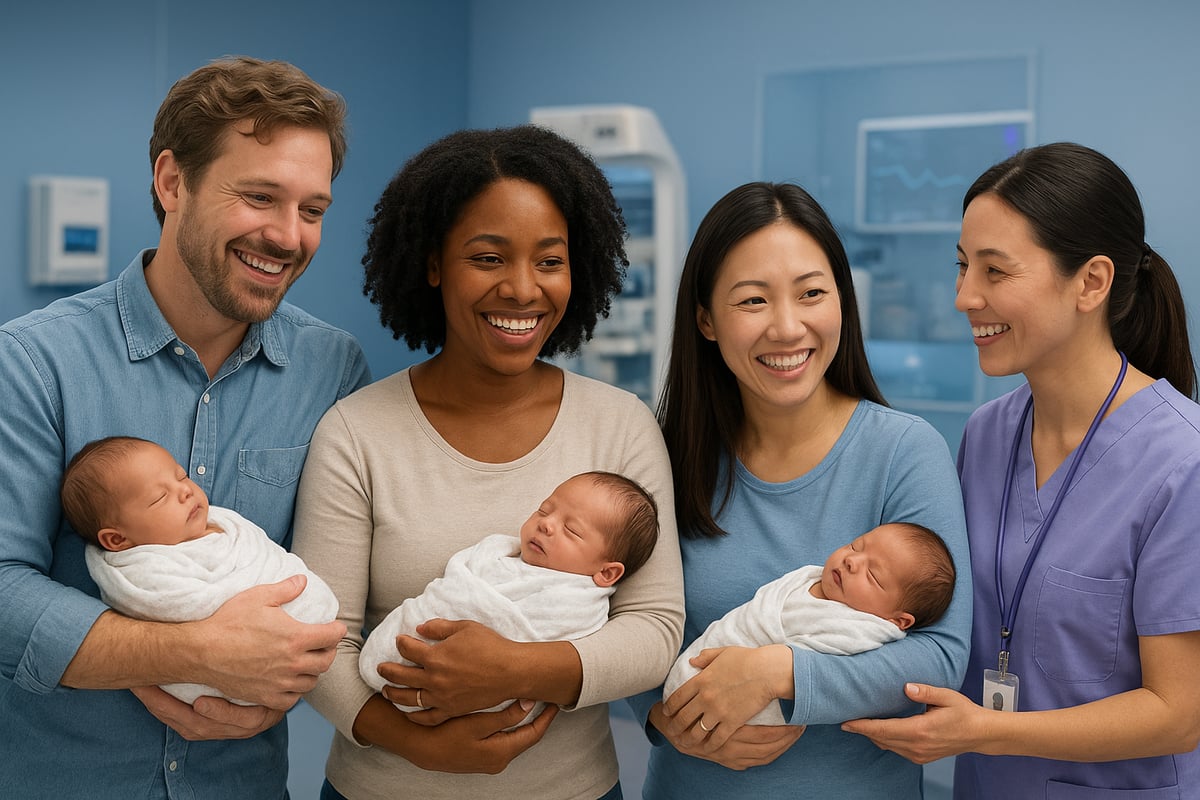
The arrival of the first ai ivf babies marked a turning point in reproductive medicine. Imagine parents who endured years of failed cycles finally holding their newborns, thanks to AI-powered selection and monitoring. These are more than statistics—they’re stories of resilience and transformation.
Here’s a quick snapshot of recent milestones:
| Year | Milestone | Impact |
|---|---|---|
| 2024 | First US ai ivf baby after 15 failed cycles | Proof that AI can succeed where manual methods struggled |
| 2025 | AI-enabled clinics hit 20+ live births | Consistent, safe results with automation |
| 2026 | AI systems expand to severe male infertility | AI identifies viable sperm with unmatched accuracy (AI in male infertility management) |
Clinics like Columbia University Fertility Center and Conceivable are leading the charge, reporting higher live birth rates and fewer cycles needed per family. For patients with complex cases—such as advanced maternal age or severe male infertility—ai ivf has opened doors once thought closed.
AI’s Role in Expanding Accessibility and Equity
Ai ivf isn’t just about cutting-edge science. It’s also about breaking down barriers for families everywhere. In the past, advanced fertility care was often out of reach for those living in rural areas or with limited resources. AI is changing that equation.
How is ai ivf making fertility more accessible?
- AI systems like BELA bring expert embryo analysis to clinics worldwide, including underserved regions.
- Non-invasive AI assessments lower the need for expensive and risky procedures.
- The cost per IVF cycle is dropping, making treatment feasible for more families.
- Clinics in low-resource settings are using ai ivf to deliver care that rivals top-tier urban centers.
By 2026, experts project a sharp rise in global IVF access, with more families able to pursue their dreams regardless of geography or income. Real-world case studies show rural clinics matching outcomes once reserved for the biggest hospitals.
Ethical and Regulatory Considerations
With rapid advances in ai ivf, new ethical questions are surfacing. Right now, U.S. IVF labs operate with limited government oversight, which raises concerns about consistency and safety. The FDA regulates certain medical devices and genetic tests, but there’s still a push for clearer standards and transparency.
Leading embryologists and ethicists are calling for:
- Standardized AI protocols across clinics
- Greater transparency in how ai ivf algorithms make decisions
- Ongoing research to ensure fairness and avoid bias
Patients and providers alike want assurance that ai ivf is safe, effective, and accountable. As the technology evolves, the conversation around ethics and regulation will only grow more crucial—ensuring that innovation always puts families first.
The Patient Experience: How AI-Driven IVF is Changing Lives
The ai ivf journey in 2026 is nothing short of a game-changer for hopeful parents. If you’ve ever felt overwhelmed by the uncertainty and stress of fertility treatments, you’re not alone. Today, AI is rewriting these stories, giving patients more control, confidence, and hope than ever before.
Enhanced Success Rates and Reduced Stress
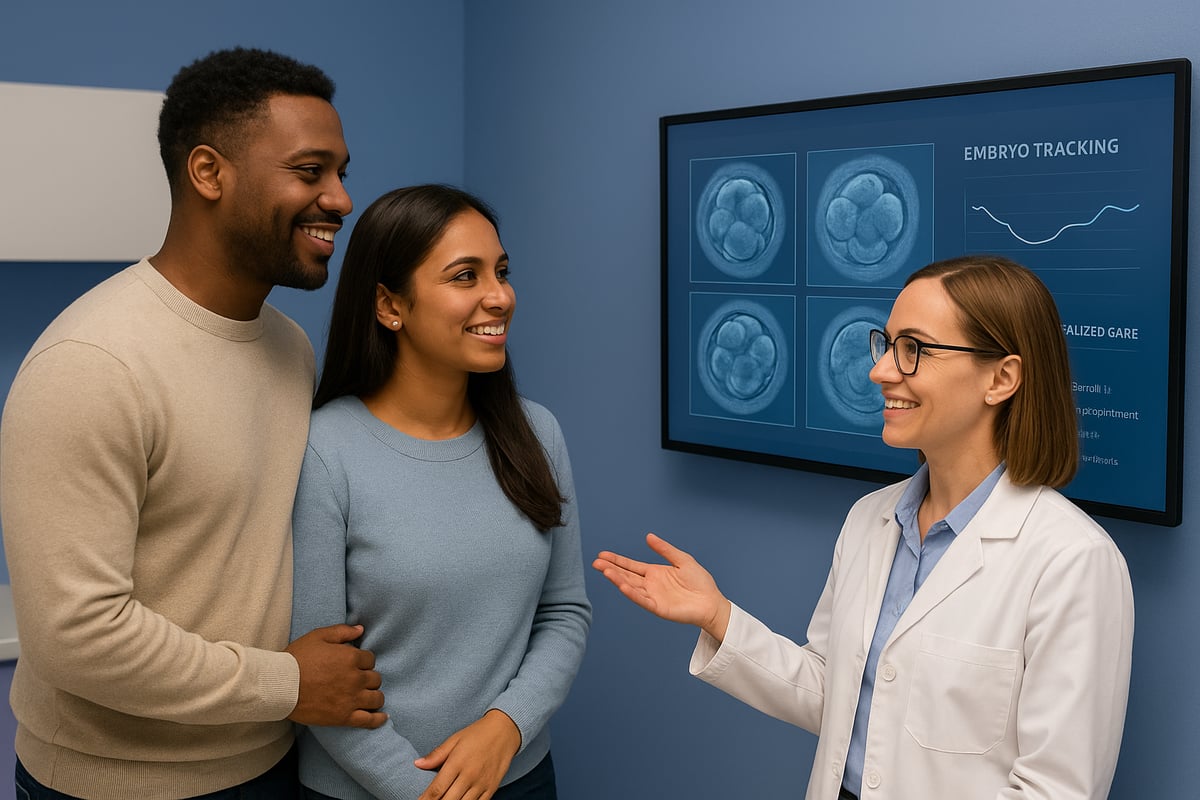
Imagine walking into your clinic, knowing that ai ivf is working behind the scenes to boost your odds. AI-powered embryo selection means more viable embryos and higher implantation rates, which translates to fewer cycles and less heartbreak.
- Patients are experiencing:
- Higher pregnancy rates after just one or two cycles
- Shorter wait times for results
- Lower costs over the course of treatment
This shift is more than numbers on a chart. Real patients, like Sarah and Mark, who struggled through five failed cycles, finally saw success with ai ivf. Their story is echoed in clinics around the world, where improved outcomes are quickly becoming the new normal.
For many, the relief is palpable. Instead of bracing for disappointment month after month, more families are celebrating positive results sooner and with less anxiety.
Improved Safety and Lower Risk
Safety is at the heart of every ai ivf advancement. By using non-invasive AI assessments, clinics can avoid procedures that might damage embryos. This tech also reduces the risk of complications for both patients and embryos.
AI-driven tracking systems meticulously monitor every embryo, ensuring nothing is misplaced or mislabeled. This level of precision means mix-ups become virtually nonexistent.
- Benefits include:
- Fewer invasive biopsies thanks to smart imaging
- Lower risk of sample confusion
- Safer, more predictable procedures
Patients no longer need to worry about human error derailing their dream of parenthood. With ai ivf, peace of mind is part of the package, and every step feels safer and more transparent.
Personalized Care and Ongoing Support
The true power of ai ivf lies in its ability to personalize every aspect of care. AI algorithms analyze your unique medical history, hormone levels, and even lifestyle factors to craft a treatment plan that fits you perfectly.
Clinicians now spend less time on repetitive tasks and more time supporting patients emotionally. AI provides continuous monitoring, so adjustments can be made in real time, making each cycle smarter and more responsive.
Looking for even more tailored support? Tools like the Personalized fertility supplement quiz help patients optimize their fertility journey, complementing the individualized approach of ai ivf.
What does this mean for you? A sense of partnership, not just with your doctor, but with technology that’s always working in your corner. The future of fertility is personal, precise, and deeply supportive.
The Future of AI IVF: What to Expect by 2030
The next chapter of ai ivf is unfolding faster than anyone could have predicted. As we look toward 2030, the landscape is set to change in ways that will impact families, clinics, and even entire countries. Imagine a world where fertility care is more precise, accessible, and individualized than ever. Let’s break down where ai ivf is headed and what you should watch for in the coming years.
Emerging Technologies and Research Frontiers
The engine driving ai ivf innovation is a fusion of data science, biology, and robotics. By 2030, clinics will tap into next-gen AI that draws from genomics, proteomics, and even the microbiome to personalize every treatment.
Predictive analytics will help forecast ovarian reserve, egg and embryo quality, and even uterine receptivity. AI-powered robotics are refining lab processes, automating everything from sperm selection to embryo transfer with pinpoint precision.
Here’s a quick look at what’s coming:
| Technology | Impact on ai ivf |
|---|---|
| AI genomics analysis | Tailored treatment protocols |
| Predictive analytics | Higher success, fewer cycles |
| Robotic automation | Consistent, error-free handling |
These advances mean that ai ivf will be faster, safer, and more effective, giving patients new hope.
Expanding Global Access and Affordability
One of the most exciting shifts in ai ivf is the promise of making fertility care available to more people, not just those in major cities or with deep pockets. Smart algorithms are reducing the cost of procedures, making it possible for clinics to serve rural and low-resource communities.
AI-driven platforms are being adopted by clinics worldwide, helping standardize care and share knowledge across borders. According to Global AI trends in reproductive medicine, international specialists are already seeing improved outcomes and expanded access thanks to these technologies.
By 2030, partnerships between AI companies, clinics, and health systems could make ai ivf as accessible as basic healthcare in many countries.
Potential Challenges and Limitations
Every revolution comes with its own set of challenges, and ai ivf is no exception. Data privacy and security are top concerns, especially as clinics rely more on cloud-based AI systems to analyze personal medical information.
Another hurdle is the need for large, diverse datasets. If AI is trained mostly on data from certain populations, it could miss crucial patterns in others, leading to bias in recommendations or outcomes.
Finally, there’s the issue of “fertility privilege.” As ai ivf becomes more advanced, it’s essential to ensure these benefits reach everyone, not just those who can pay for premium care. The road ahead requires both vigilance and advocacy.
Ethical, Legal, and Societal Questions
As ai ivf technology advances, debates around embryo selection and genetic enhancement are heating up. Some worry about the prospect of “designer babies,” while others see AI as a tool to avoid devastating genetic diseases.
Legal frameworks are still catching up. In the U.S., oversight of IVF labs is limited, and the FDA is only beginning to regulate some AI-driven devices. Patient consent and transparency must be prioritized, so families fully understand how AI is being used in their care.
Ethicists and clinicians agree: AI should support, not replace, human expertise in the fertility journey.
The Path Forward for Patients and Providers
So, how can you make the most of ai ivf as it evolves? Start by choosing a clinic that’s transparent about its technology and outcomes. Ask about the specific AI tools they use, how they handle data privacy, and what support systems are in place.
Consider what resources you’ll need along the way. Many families benefit from extra guidance or wellness products, such as those found in Fertility and IVF support packs.
Keep advocating for yourself, stay informed, and support ongoing research. The future of ai ivf is collaborative, blending smart technology with compassionate care.
References and Further Reading
Looking to dive deeper into the world of ai ivf? Here are some trusted resources and studies to get you started.
- Nature Medicine, The Lancet, and Fertility and Sterility for peer-reviewed research on ai ivf advancements.
- Explore AI-enhanced trigger-oocyte pickup estimation for the latest in machine learning applications in IVF timing.
- Fertility basics and resources for patient-friendly guides on fertility and the IVF process.
- American Society for Reproductive Medicine (ASRM) for clinical guidelines and expert interviews.
- Clinical trials databases for ongoing studies in ai ivf.