


 .
. .
.
More energy. Less fat. More muscle mass. Better libido.
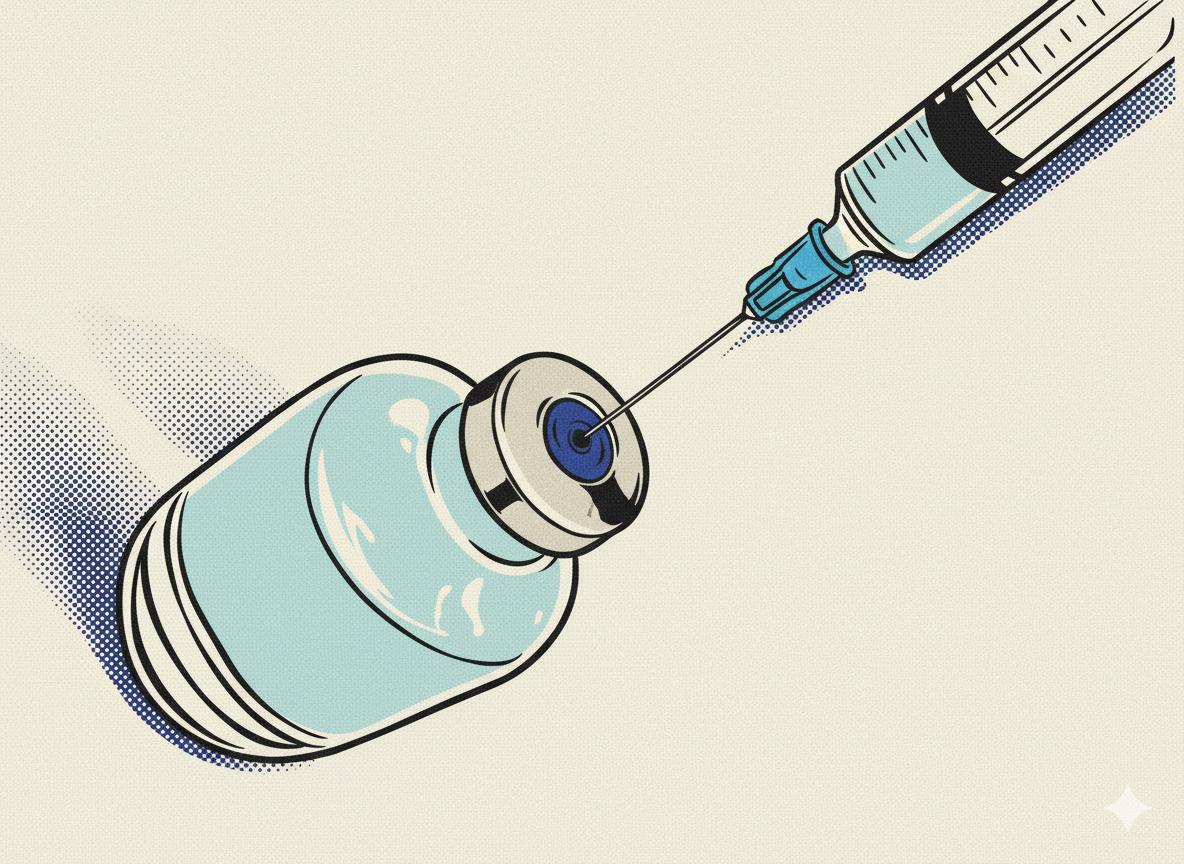
These are all purported results from Testosterone Replacement Therapy (TRT), a medical treatment that supplements a man's testosterone through hormonal skin patches, gels, mouth patches, or injections and implants.

Sounds great, right? Sign me up! Well, not so fast.
Side Effects of TRT
Despite its compelling benefits, there are just as many, if not more, substantial risks with TRT. This treatment increases the risk of heart attack not only in older men, but also in younger men with a history of heart disease.
TRT can also make benign prostatic hypertrophy worse and can even stimulate prostate cancer to grow. Other issues TRT can worsen include sleep apnea and erythrocytosis (high blood count), making blood thicker and more prone to clotting.
⚠️ IMPORTANT
TRT carries serious cardiovascular risks beyond just fertility. It has been linked to increased heart attack risk in younger men with a history of heart disease, worsening of sleep apnea, and erythrocytosis, a condition that makes blood thicker and more prone to dangerous clotting.
TRT and Infertility
Infertility is an often under-represented risk of TRT. In fact, supplemental testosterone from outside the body is so effective at stopping sperm production that it was once considered as a potential method of birth control.
A recent study published in Fertility and Sterility found that while testosterone use among fertility patients was actually relatively low, its effects were nonetheless devastating. Even after six months of discontinued use of testosterone, more than a third of men studied did not regain the ability to produce sperm.
📊 WHAT THE RESEARCH SAYS
A study published in Fertility and Sterility found that even after six months of discontinued TRT use, more than one-third of men studied had still not regained the ability to produce sperm, underscoring just how profoundly exogenous testosterone can suppress the male reproductive system. (PubMed)
✦ KEEP READING
Not Sure What Your Body Needs?
Take our free 2-minute quiz and get a personalized supplement protocol built around your specific cycle, hormones, and health signals.
Take the free Score → Explore the App →
The Future of Testosterone Use
While testosterone use in patients struggling to conceive is relatively low, statistics say it's likely to rise. Between 2000 and 2011, the prescription of supplemental testosterone increased by more than 850 percent in the U.S., according to new research. The study authors believe that new, easy-to-use forms of testosterone along with television marketing are primarily responsible for the rise in prescription rates.
850%
Increase in supplemental testosterone prescriptions in the U.S. between 2000 and 2011, driven largely by new delivery formats and direct-to-consumer TV marketing
Over the same period, global pharmaceutical sales of testosterone increased from about 150 million to 1.8 billion dollars. Obviously someone is benefitting from this substantial increase in the use of supplemental testosterone. Unfortunately, it's usually not the patient taking the testosterone.
"Global pharmaceutical sales of testosterone increased from about 150 million to 1.8 billion dollars. Obviously someone is benefitting from this substantial increase. Unfortunately, it's usually not the patient taking the testosterone."
Before you or your partner pursue TRT, be sure to weigh the risks of the treatment, especially if you're thinking of trying to conceive.
Try natural ways of increasing testosterone instead. Losing weight, increasing your exercise, reducing stress, eating healthier, and getting more sleep can all have a positive impact on your testosterone levels. And guess what? None of these lifestyle improvements will increase your risk of heart attack or make you infertile. Quite the contrary!
KEY INSIGHT
Natural testosterone optimization, through weight loss, exercise, stress reduction, better sleep, and improved diet, can meaningfully raise testosterone levels without any of the cardiovascular, prostate, or fertility risks associated with TRT.
✦ THE CONCEIVABLE SYSTEM
Personalized Supplements. AI Care Team. The Halo Ring.
Everything your body needs to optimize fertility, built around your information, not someone else's.
Take the free Score → Check Out the App →
Frequently Asked Questions
Can sperm production recover after stopping TRT?
It may, but recovery is not guaranteed and can take a long time. Research published in Fertility and Sterility found that even after six months of discontinued TRT use, more than a third of men had still not regained the ability to produce sperm. If you are planning to conceive, it's critical to discuss this risk with your doctor before starting TRT.
Are there safer alternatives to TRT for low testosterone?
Yes. Lifestyle changes, including weight loss, regular exercise, stress reduction, improved sleep, and a healthier diet, can all meaningfully raise testosterone levels naturally. These approaches carry none of the cardiovascular, prostate, or fertility risks associated with exogenous testosterone supplementation.
Why did TRT prescriptions rise so dramatically?
Research points to two primary drivers: the introduction of easier-to-use delivery formats (gels, patches, and implants) and aggressive direct-to-consumer television marketing. Between 2000 and 2011, prescriptions rose over 850% in the U.S., while global pharmaceutical sales grew from roughly $150 million to $1.8 billion, a striking commercial expansion that outpaced genuine clinical need.
How does the Conceivable system actually work?
Conceivable combines three things: personalized supplement packs built from your quiz results and health data, an AI care team of 7 specialists (led by Kai, your fertility coordinator) who help you understand your pattern and can suggest a pack, and the Halo Ring for continuous biometric tracking. The system is built on published reproductive-health research and 20 years of clinical practice. It starts at $14.99/month.
How do I know which supplements I actually need?
Take the free 2-minute Conceivable quiz. It analyzes your cycle patterns, energy, stress, digestion, and health history to identify the specific nutrients your body needs, not a generic prenatal, but a protocol built for exactly where you are right now.
Do I need the Halo Ring to use Conceivable?
No. The Halo Ring is optional and adds overnight tracking of temperature, HRV and sleep, which Kai uses to help you understand your pattern and suggest a pack. But the personalized supplement packs and AI care team work without it. The ring is a one-time $250 purchase with no subscription required.
Your Report puts your cycle, energy, sleep and symptoms in context, then shows what may be helping, what may be getting in the way, and where to start.
Get my Report, $89 Educational guidance, not a diagnosis.Kai is your AI fertility coordinator, built from 20 years of clinical practice. She can answer your specific questions right now.
Chat with Kai in the app
