


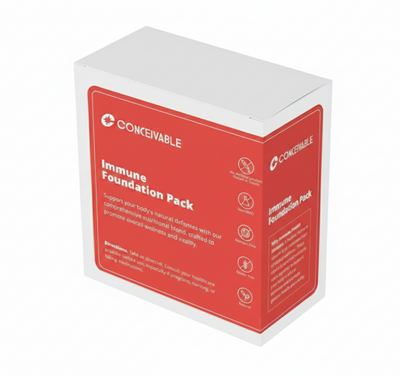
 .
. .
.
Happy Friday! When we first opened up our Friday Question and Answer blog, we got tons of great questions. One of the topics that we received the most questions about was basal body temperature (BBT). Today, Conceivable Founder Kirsten Karchmer, answers some of the most frequently asked questions about BBT.
KEY INSIGHT
BBT is one of the most information-dense and underutilized tools in fertility tracking, it gives you a real-time window into your hormonal health across every phase of your cycle, all from a simple morning temperature reading.
What is BBT?
BBT stands for basal body temperature. Basal body temperature is the body's resting temperature and an important indicator of your fertile potential.
How do I track my BBT?
The easiest way to track your BBT is to take your temperature by mouth each morning just after you wake up, but before you get out of bed or move around too much. The less you move before taking your temperature, and the more consistent you are about taking it at the same time everyday, the more accurate these readings will be.
Do I need a fancy thermometer to track my BBT?
Nope - any BBT thermometer from the corner drug store will work. While there are a lot of nifty thermometers out there, a fancier thermometer isn't going to make you any more fertile. Only understanding what your BBT patterns mean, and taking action to improve them, can actually change your chances of getting pregnant. You could take your BBT with a unicorn horn, but it's not going to magically change your fertility.
"You could take your BBT with a unicorn horn, but it's not going to magically change your fertility. Only understanding what your BBT patterns mean, and taking action to improve them, can actually change your chances of getting pregnant."
I don't like tracking BBT, so seriously, why is BBT so important?
Your BBT is important because it gives you a snapshot of hormonal activity across your menstrual cycle. During each phase of the cycle, different hormones become dominant, each with its own effect on body temperature. By tracking your temperature, you can see which hormones are active and if the interactions between hormones are working smoothly. This can give you really important insight into what's going on with your cycle. Tracking BBT doesn't have to be difficult or annoying, and it gives you really important data!
97.2–98°F
The healthy BBT range across your cycle, lower before ovulation, rising above 98°F after progesterone kicks in
✦ KEEP READING
Not Sure What Your Body Needs?
Take our free 2-minute quiz and get a personalized supplement protocol built around your specific cycle, hormones, and health signals.
Take the free Score → Explore the App →
Wait, I thought my body temperature was always supposed to be 98.6º F.
98.6º F is your active body temperature. When you're up and moving around, your body is expending energy, which is released in the form of heat that drives body temperature up. Your basal body temperature should generally run a little lower, from about 97.2º F before ovulation to above 98º F afterwards.
Why does my BBT change throughout the month?
Different hormones produce different thermal effects throughout the menstrual cycle. In the beginning of your cycle, a balance between estrogen and follicle stimulating hormone (FSH) should result in a relatively low temperature (97.2-4º F). After ovulation, progesterone causes temperatures to surge upwards of 98º F. These changes are completely normal and indicate healthy hormone function.
📊 WHAT THE RESEARCH SAYS
Progesterone's thermogenic effect, the post-ovulation rise in BBT, is well established in reproductive medicine. Studies confirm that a sustained temperature elevation of at least 0.2°C above the pre-ovulatory baseline is a reliable retroactive indicator of ovulation, and that blunted or absent rises can signal luteal phase insufficiency affecting implantation.
What can changes in BBT tell me?
Some changes in BBT are totally normal and healthy, like the rise in temperature that most women see after ovulation. Other changes, like a lot of variation from day to day, or temperatures outside of the healthy range above, may indicate that hormone function isn't optimal. Conceivable can help identify these changes and provides valuable feedback to help you address them.
⚠️ IMPORTANT
BBT readings can be thrown off by illness, alcohol, poor sleep, traveling across time zones, or taking your temperature at a different time than usual. Always note these disruptions in your tracking so you don't misread a single data point as a hormonal pattern.
Can my BBT tell me when I'm fertile?
It can certainly help! Tracking BBT over time helps establish a pattern of ovulation. For most women, ovulation will occur about 14 days before your period starts. This should coincide with a big rise in BBT. Some women will also see a temperature "dip" just before ovulation occurs and experience a change in the quality or quantity of their cervical fluid.
I don't recommend using BBT as your only predictor of ovulation though. You're most fertile right before you ovulate, so if you wait for those BBT temperatures to rise, you're missing out on your most fertile days.
✦ THE CONCEIVABLE SYSTEM
Personalized Supplements. AI Care Team. The Halo Ring.
Everything your body needs to optimize fertility, built around your information, not someone else's.
Take the free Score → Check Out the App →
Friday Q&A: Your Questions Answered.
Every Friday, we answer your great questions about fertility, the Conceivable Program, or whatever else you're wondering about. Don't be afraid - fertility is really complicated and can be super confusing - there are no silly questions! Ask away!
You can email us your questions at blog@conceivable.com and be sure to check back next week to see the answers! We'll see you next Friday with a new Q&A.
Frequently Asked Questions
Can I use BBT tracking alone to get pregnant?
BBT tracking is a valuable piece of the puzzle, but it works best as part of a broader approach. Because your temperature rises after ovulation has already occurred, relying on BBT alone means you may miss your most fertile window. Pairing BBT with cervical fluid observation, ovulation predictor kits, or a tool like the Conceivable Halo Ring gives you a much more complete picture.
What does it mean if my BBT never clearly rises after ovulation?
A flat or erratic post-ovulatory temperature pattern can be a sign that progesterone levels aren't rising adequately, a condition called luteal phase deficiency. This can affect your ability to implant a fertilized egg. If you're seeing this pattern consistently, it's worth bringing your charts to a healthcare provider or running them through Conceivable's analysis tools.
How long do I need to track before my BBT data is useful?
Most practitioners recommend tracking for at least two to three full cycles before drawing conclusions. One cycle gives you a starting point; two or three cycles start to reveal whether your patterns are consistent, irregular, or shifting, all of which is meaningful data for understanding your hormonal health.
How does the Conceivable system actually work?
Conceivable combines three things: personalized supplement packs built from your quiz results and health data, an AI care team of 7 specialists (led by Kai, your fertility coordinator) who help you understand your pattern and can suggest a pack, and the Halo Ring for continuous biometric tracking. The system is built on published reproductive-health research and 20 years of clinical practice. It starts at $14.99/month.
How do I know which supplements I actually need?
Take the free 2-minute Conceivable quiz. It analyzes your cycle patterns, energy, stress, digestion, and health history to identify the specific nutrients your body needs, not a generic prenatal, but a protocol built for exactly where you are right now.
Do I need the Halo Ring to use Conceivable?
No. The Halo Ring is optional and adds overnight tracking of temperature, HRV and sleep, which Kai uses to help you understand your pattern and suggest a pack. But the personalized supplement packs and AI care team work without it. The ring is a one-time $250 purchase with no subscription required.
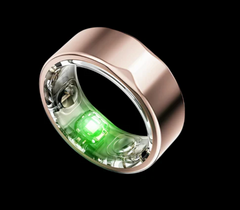
The Halo Ring reads your overnight temperature, sleep and HRV automatically, the signals this article is about, for $250.00.
Meet the Halo RingKai is your AI fertility coordinator, built from 20 years of clinical practice. She can answer your specific questions right now.
Chat with Kai in the app
