


 .
. .
.
Millions of women across the globe are tracking their BBTs using over 500 different trackers. But what they don't seem to realize is how much great information can be gleaned from a BBT that goes WAY beyond identifying ovulation.
Simply tracking is great for fertile women who need help figuring out when to have sex to get pregnant, but for women with fertility issues, your BBT can teach you so much more than that, especially when it comes to your luteal phase defect and low progesterone.
'But no doctor has ever said anything about BBTs and my fertility!' Yep, I have probably heard that a million times. And it makes sense; your doctor isn't looking at the small stuff, that's not their job. Their job is to make sure you don't have any diseases, and if you do, to treat them. Our job is to look at lots of different factors to pinpoint all the little stuff that is misfiring, figure out why it is happening, and then make comprehensive plans to fix it. We all have important jobs to keep you healthy and safe, and different ways of approaching that job. For example, if your doctor notices that you have low Progesterone, they only have one tool to treat it: synthetic Progesterone. Our approach, on the other hand, is to try to figure out WHY you are not making enough progesterone and address that. The end result is the same: more progesterone, but the awesome side effect of our work is that you get a super healthy, regular cycle naturally, PLUS great BBT's, for life.
KEY INSIGHT
Your BBT chart reveals far more than just ovulation timing. For women with fertility issues, the temperatures in your luteal phase are a direct window into how much progesterone your body is actually producing, information your doctor may never mention.
Low BBTs = Low Progesterone
So why is having enough progesterone so very important? There are many essential functions for reproduction. First, progesterone is necessary to start to thicken the uterine lining and help it accept your fertilized egg by preventing uterine contractions. If you don't get pregnant, the corpus luteum, which is the gland that held your egg, breaks down and your progesterone levels drop, which basically sends Aunt Flo an invitation to visit. Progesterone even helps with the production of breast milk after a baby is born. If you don't have enough, it can affect your estrogen levels, too, which contribute to weight gain, low sex drive, and gall bladder issues. Not good for anyone, right? Basically, progesterone is the fertility bomb that you simply cannot do without if you're trying to get pregnant.
"Progesterone is the fertility bomb that you simply cannot do without if you're trying to get pregnant."
✦ KEEP READING
Not Sure What Your Body Needs?
Take our free 2-minute quiz and get a personalized supplement protocol built around your specific cycle, hormones, and health signals.
Take the free Score → Explore the App →
Level Up Your Luteal Phase Tracking to Improve Your Fertility
In my 20 years of clinical practice, I reviewed more than 250,000 BBT charts. I was looking for patterns that could help me identify issues that were keeping my patients from getting pregnant. The most important thing I discovered was that you can tell a lot about how much progesterone a woman was making by how high her temperatures got after she ovulated. In the luteal phase (CD 14-28) we know that the corpus luteum, is responsible for secreting the initial progesterone. To put it in simple terms: the progesterone that gland makes is what raises your temperature after ovulation. That's why a lower luteal temperature can be a clue that progesterone is lower. So take a good look at that BBT in the luteal phase; when your temps are low after you ovulate it's wise to suspect that your progesterone is low and that could be a big roadblock to you getting and STAYING pregnant.
Low Temps and Low Progesterone: We Need To Know Why
First of all, you are not alone. In my opinion, low progesterone is one of the most common issues preventing women from getting pregnant. I am sure you have heard this before in technical terms like 'Luteal Phase Defect associated with Low Progesterone'. The good news is that while low progesterone can keep you from getting and staying pregnant, if you can accurately figure out what is causing it, you can significantly improve your levels (and your chances!) over just a few months. In my work, I am always asking the question 'WHY?'. I know we could just give you supplemental progesterone and it may help you get pregnant, but it won't fix the issue that's preventing you from making enough progesterone on your own. That is what I am interested in figuring out with each of the women I help.
⚠️ IMPORTANT
Supplemental progesterone may help you get pregnant, but it won't fix the underlying reason your body isn't making enough on its own. Without addressing the root cause, the problem is likely to persist cycle after cycle.
What you can do about low progesterone, and low luteal phase temperatures
So here's what I know: the two most important things necessary for healthy, high BBT's are, 1) the ability to make enough heat in your body, and 2) ensuring that your diet contains enough of the right kind of high quality nutrients and that your body can easily convert that food into energy.
If either of these things are out of whack, you will struggle to get those temps high enough to make enough progesterone. Everything is connected, so if you don't make enough heat (Are you cold when nobody else is? Do you pee all the time? These are clues!) then it makes it hard to transform your food into usable energy. But, it also takes energy to make heat so having one out of whack usually sends the other into a tailspin as well. We've got to look at why that's happening.
📊 WHAT THE RESEARCH SAYS
Progesterone is important for implantation and early pregnancy. Luteal phase deficiency has been linked to infertility, though experts say it hasn't been proven to cause it on its own (ASRM, 2026). Research indicates that adequate luteal phase progesterone is essential not only for implantation but for maintaining the uterine environment in early pregnancy, making it one of the most clinically important hormones to optimize when trying to conceive.
Here's the deal: this is common as hell for women today, and it's a little hard to figure out if you aren't a pro, but once you have a good plan in place it's actually pretty easy to correct. I want you to be as healthy as possible so that you can deliver a happy, healthy baby, and continue to feel great afterwards! The only way to do that is to dive deep, look at all the factors, and make a custom plan of attack to correct your fertility issues and get you where you need to be, naturally. That's how we help women, just like you.
✦ THE CONCEIVABLE SYSTEM
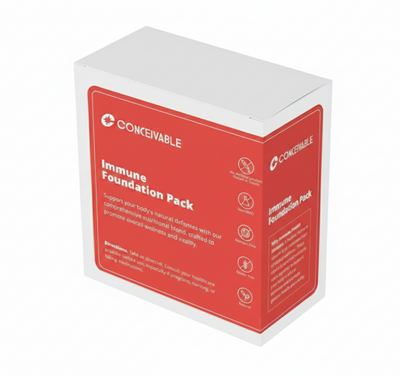
Personalized Supplements. AI Care Team. The Halo Ring.
Everything your body needs to optimize fertility, built around your information, not someone else's.
Take the free Score → Check Out the App →
Frequently Asked Questions
What does a low BBT in my luteal phase actually mean?
A low basal body temperature (BBT) in the luteal phase, the roughly two weeks after ovulation, is a strong indicator that your body may not be producing adequate progesterone. The corpus luteum, the gland that secretes progesterone after ovulation, is what drives your temperature up, because progesterone raises body temperature. When your temperatures don't rise much after ovulation, it can be a sign the gland isn't making as much progesterone. Low luteal phase temps are often the first visible signal of a Luteal Phase Defect (LPD), which can prevent both conception and the early maintenance of pregnancy.
Can low progesterone be fixed without synthetic hormones?
Yes, and that's exactly the approach Conceivable is built around. Rather than simply supplementing with synthetic progesterone (which treats the symptom but not the cause), the goal is to understand why your body isn't producing enough progesterone on its own. The two most important factors are your body's ability to generate heat and its ability to convert high-quality nutrients into usable energy. When both are functioning well, progesterone levels and BBTs typically improve naturally within a few months.
Are cold hands, frequent urination, or feeling cold all the time connected to low BBTs?
Yes, these are real clues. If you're often cold when nobody else is, or you feel like you have to pee constantly, these can be signs that your body isn't generating enough internal heat. In my clinical experience, women with these symptoms often have low luteal temperatures too. Figuring out why is the first step.
How does the Conceivable system actually work?
Conceivable combines three things: personalized supplement packs built from your quiz results and health data, an AI care team of 7 specialists (led by Kai, your fertility coordinator) who help you understand your pattern and can suggest a pack, and the Halo Ring for continuous biometric tracking. The system is built on published reproductive-health research and 20 years of clinical practice. It starts at $14.99/month.
How do I know which supplements I actually need?
Take the free 2-minute Conceivable quiz. It analyzes your cycle patterns, energy, stress, digestion, and health history to identify the specific nutrients your body needs, not a generic prenatal, but a protocol built for exactly where you are right now.
Do I need the Halo Ring to use Conceivable?
No. The Halo Ring is optional and adds overnight tracking of temperature, HRV and sleep, which Kai uses to help you understand your pattern and suggest a pack. But the personalized supplement packs and AI care team work without it. The ring is a one-time $250 purchase with no subscription required.
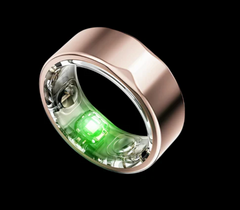
The Halo Ring reads your overnight temperature, sleep and HRV automatically, the signals this article is about, for $250.00.
Meet the Halo RingKai is your AI fertility coordinator, built from 20 years of clinical practice. She can answer your specific questions right now.
Chat with Kai in the app
