


 .
. .
.

PMS Is Not "Just Normal"
"But my doctor said that my PMS is totally normal, that it's got nothing to do with my fertility issues, that it's just something women have to deal with."
Sound familiar? I know I've heard it before.
Here's the deal though, PMS doesn't just magically appear out of nowhere, and it's not insignificant. From a medical perspective, no one knows exactly what causes PMS, or exactly what to do about it. There's no medical cure for PMS, so even though it affects millions of women, many doctors just ignore it. The suffering is "normal".
"Just because we don't have exact answers about PMS, doesn't mean we don't know anything about it."
Just because we don't have exact answers about PMS, doesn't mean we don't know anything about it. First, we know that PMS is the result of hormonal dysfunction, the same hormones that control the other aspects of your reproductive system. It makes sense that if your reproductive hormones are so out of whack that you're a starving, bloated, crampy, emotional mess or crazy lunatic once a month, that the very same hormonal dysfunction could negatively affect your ability to get and stay pregnant. As common as PMS may be, as women we know that how we feel when we're PMSing isn't just normal.
Second, and maybe more importantly, research suggests that levels of PMS are higher in women that suffer from infertility. Does that mean PMS causes infertility? No it doesn't, but it's certainly concerning. More research is definitely needed in this area, but until we have proof, we can at least say that PMS and infertility are associated.
📊 WHAT THE RESEARCH SAYS
Published research (NCBI) indicates that rates of PMS are significantly higher among women who experience infertility, and that the two conditions share a documented association, even if causation hasn't been established. (Source 1, Source 2)
So say you have PMS, or even PMDD, what now? In my clinical experience, and I can't stress this enough, you're not just stuck with it. It doesn't have to be your normal.
✦ KEEP READING
Not Sure What Your Body Needs?
Take our free 2-minute quiz and get a personalized supplement protocol built around your specific cycle, hormones, and health signals.
Take the free Score → Explore the App →
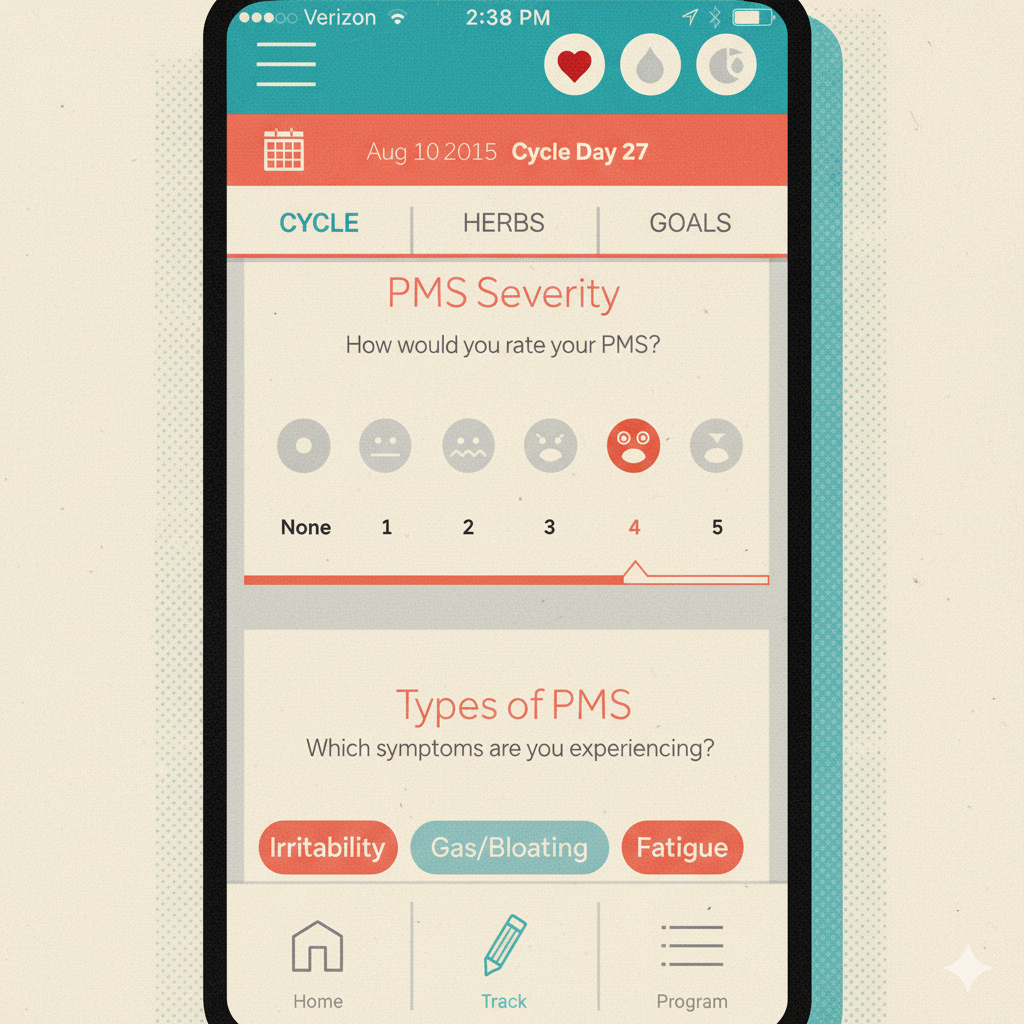
PMS is a lot more than just getting moody before your period. PMS tends to affect body systems that are functioning below their optimal level. For instance, when the digestive system's ability to turn food into nutrients and energy is compromised, you're left with food cravings (chocolate anyone?), gas and bloating, and fatigue. If it's the liver's ability to smoothly metabolize hormones isn't up to snuff, you're stuck with breast tenderness, headaches, acne, and mood changes.
KEY INSIGHT
PMS doesn't affect just one system, it reveals which body systems are functioning below their optimal level. Digestive sluggishness, liver stress, and hormonal imbalance all show up as PMS symptoms. Treat the root, and the symptoms follow.
Your hormonal system is one of the most complicated systems in the body, and it's significantly affected by factors like stress, sleep, diet, and hydration, factors that you actually have control of. That's great news; it means that by controlling the factors that affect hormonal function, we can actually help the hormonal system stay in balance. Above all, that means getting rid of hormonal dysfunction and leaving PMS behind.
⚠️ IMPORTANT
If you're experiencing severe PMS or PMDD symptoms that significantly impact your daily life, don't dismiss them as "just normal." These symptoms are signals from your body that something is out of balance, and they deserve to be taken seriously, both for your quality of life and your reproductive health.
PMS shows us where we're weakest. But you can make those weak parts strong again. Conceivable creates custom plans that help women identify and improve parts of their cycle and lifestyle that could prevent them from getting pregnant. If you're struggling to get pregnant, and suffer from PMS, Conceivable has a plan for you.
✦ THE CONCEIVABLE SYSTEM
Personalized Supplements. AI Care Team. The Halo Ring.
Everything your body needs to optimize fertility, built around your information, not someone else's.
Take the free Score → Check Out the App →
Frequently Asked Questions
Can PMS really affect my ability to get pregnant?
PMS won't directly prevent conception, but it's a signal that your reproductive hormones aren't functioning optimally, and those same hormones govern ovulation, implantation, and early pregnancy. Research has found a documented association between PMS and infertility, which means it's worth addressing, not dismissing.
Is PMDD different from PMS, and does it matter for fertility?
PMDD (premenstrual dysphoric disorder) is a more severe form of PMS, characterized by significant mood disturbances alongside physical symptoms. It reflects deeper hormonal dysfunction than typical PMS, and the same underlying imbalances that drive PMDD can affect your broader reproductive health.
What lifestyle factors actually help with PMS?
Stress, sleep quality, diet, and hydration are among the most significant drivers of hormonal imbalance, and they're all within your control. Addressing these consistently can meaningfully reduce PMS symptoms by supporting your hormonal system's ability to regulate itself.
How does the Conceivable system actually work?
Conceivable combines three things: personalized supplement packs built from your quiz results and health data, an AI care team of 7 specialists (led by Kai, your fertility coordinator) who help you understand your pattern and can suggest a pack, and the Halo Ring for continuous biometric tracking. The system is built on published reproductive-health research and 20 years of clinical practice. It starts at $14.99/month.
How do I know which supplements I actually need?
Take the free 2-minute Conceivable quiz. It analyzes your cycle patterns, energy, stress, digestion, and health history to identify the specific nutrients your body needs, not a generic prenatal, but a protocol built for exactly where you are right now.
Do I need the Halo Ring to use Conceivable?
No. The Halo Ring is optional and adds overnight tracking of temperature, HRV and sleep, which Kai uses to help you understand your pattern and suggest a pack. But the personalized supplement packs and AI care team work without it. The ring is a one-time $250 purchase with no subscription required.
Your Report puts your cycle, energy, sleep and symptoms in context, then shows what may be helping, what may be getting in the way, and where to start.
Get my Report, $89 Educational guidance, not a diagnosis.Kai is your AI fertility coordinator, built from 20 years of clinical practice. She can answer your specific questions right now.
Chat with Kai in the app
