


 .
. .
.
How often do you hit the gym? A recent study published in Fertility and Sterility demonstrated that women that were active during the year leading up to their IVF procedure had higher pregnancy rates than women that were more sedentary.
It makes sense, right? Exercise beneficially affects stress modulation, hormonal regulation, sleep, energy levels, glucose tolerance, and blood circulation. All of these improve a woman's chance of conceiving.
Nearly everyone knows that exercise is good for your health. But not everyone is aware of how much exercise is optimal for your fertility, and that more isn't actually always better. In a 2012 study that looked at more than 3,500 women, researchers found that for women with normal weight, vigorous physical activity actually decreased their chances of conception.
Being fit for fertility is all about balance. That balance is going to be a little different for every woman, so it's important to tune into your own body and find a routine that works for you. Below are three guidelines for you to follow to become both fit and fertile:
KEY INSIGHT
Exercise is a fertility tool, but only when it's calibrated correctly. Too little and you miss the hormonal and circulatory benefits. Too much and you deplete the very energy your body needs to build a healthy uterine lining and sustain a pregnancy.
Less is Really More
In our culture, we almost always assume more is better, and many women apply that to fitness as well, assuming that the fitter they get, the more fertile they'll be.
Yet, these same women often struggle with exhaustion and fatigue. Their adrenal glands are burned out and they're running on fumes most of the time. Many of the women I work with don't have surplus energy to start with, so working out strenuously depletes the essential energy they need to make blood and nutrients for a healthy uterine lining, and ultimately to sustain a growing baby.
For many of you, the thought of exercising less probably seems crazy because it feels so necessary to manage your stress. You need that release of endorphins, right? I get it.
Balance is key; combine moderate exercise with more rest and you'll be even more resilient to stress. You won't need that release of endorphins nearly as badly!
3,500+
Women studied in a 2012 research paper showing that vigorous physical activity actually decreased conception chances in normal-weight women
Replace Abs of Steel with Long Lean Muscle
All of us want abs of steel. I know I do! But when you're trying to conceive, a six-pack may not be the best look for you.

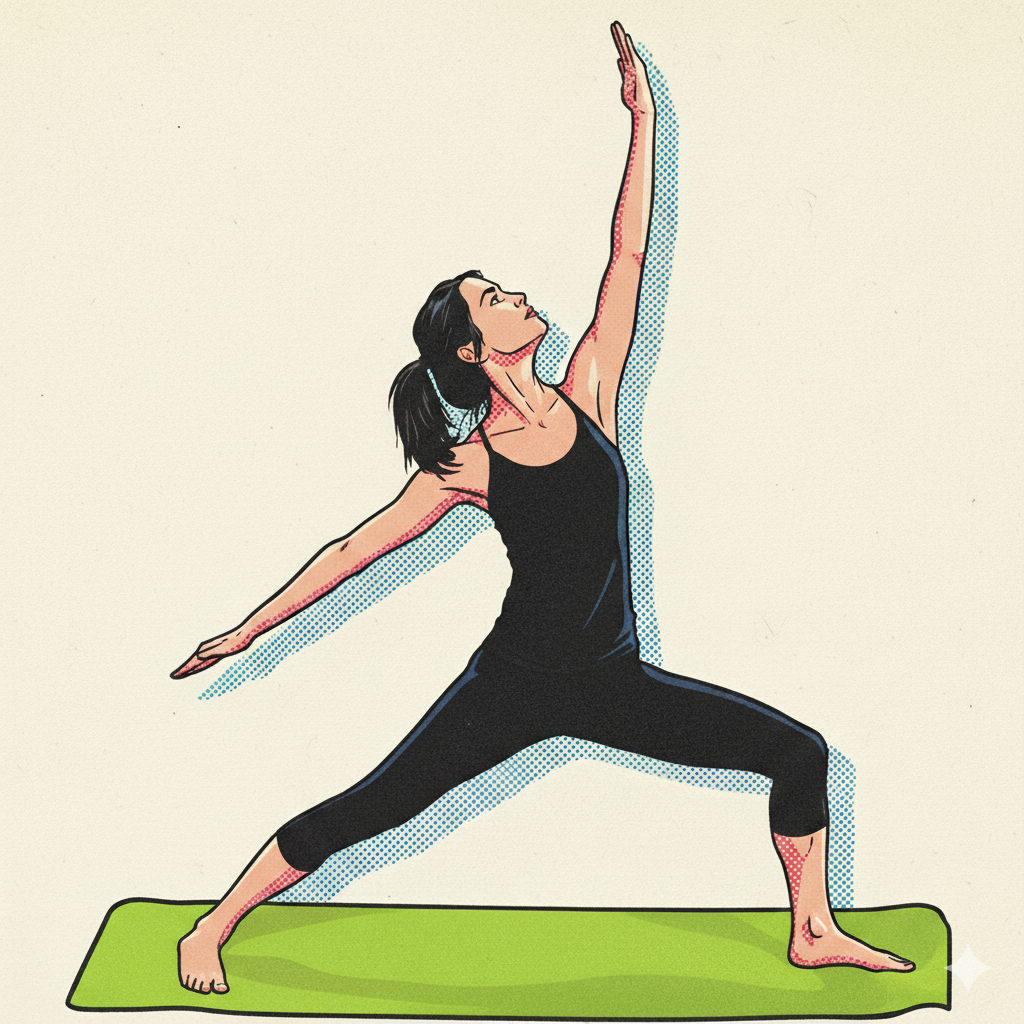
When we perform exercises that constrict our abdominal muscles, we also constrict the blood flow there, which is necessary for optimal uterine lining development. Compared to pilates and crunches, yoga and stretching elongate the femoral and uterine arteries, promoting blood flow to the uterus and ovaries.
We don't want to grow our babies in steel cages. We want to give them a lush place to land, covered in a thick, velvety blanket of super high-quality blood to implant and grow in.
"We don't want to grow our babies in steel cages. We want to give them a lush place to land, covered in a thick, velvety blanket of super high-quality blood to implant and grow in."
Not Sure What Your Body Needs?
Take our free 2-minute quiz and get a personalized supplement protocol built around your specific cycle, hormones, and health signals.
Take the free Score → Explore the App →
Stay Cool and Avoid Heated Yoga
While we do need warmth to promote progesterone production and healthy reproduction, too much of a good thing starts to become hurtful, not helpful. Excessive sweating and exposure to high heat for long periods of time can really injure your fertility.
Think of your body fluids as motor oil, the fluids act as coolants and lubricants for your system. When there's too much heat, the elevated temps dry out fluids (including super important cervical fluid) and raise basal body temperatures, a pattern typically seen in women closer to 40!
Remember: inducing sweating for long periods of time is a therapeutic intervention, not a lifestyle. Doing an occasional sauna can be helpful, but sweating it out at your heated yoga class five times a week will deplete your body over time.
⚠️ IMPORTANT
Heated yoga and intense sweat sessions done repeatedly can raise basal body temperature and deplete cervical fluid, two factors that directly impact your fertility window and hormone balance. An occasional sauna is fine; making high-heat exercise a daily habit while trying to conceive is not.
📊 WHAT THE RESEARCH SAYS
A study published in Fertility and Sterility found that women who were physically active in the year leading up to IVF had significantly higher pregnancy rates than sedentary women, but separate research on 3,500+ women showed vigorous activity in normal-weight women had the opposite effect. The takeaway: moderate, consistent movement wins over intensity every time when fertility is the goal.
Here's my bottom line about exercise: Think of it as a means to keep your blood pumping and muscles flexible, but avoid slipping into an intense training mentality.
Again, exercise is all about balance, and that balance is going to be different for each individual woman. Focus on incorporating multiple shorter, less strenuous exercise sessions into your week, things like yoga and brisk walks are great options. Exercise should be pleasurable and leave you invigorated, not be a punishment that robs you of vital energy. Save your energy for growing babies!
To learn more about how Conceivable can help you tackle big problems like exercise, with little, tiny daily steps that can result in dramatic improvements for your fertility, just click below.
✦ THE CONCEIVABLE SYSTEM
Personalized Supplements. AI Care Team. The Halo Ring.
Everything your body needs to optimize fertility, built around your information, not someone else's.
Take the free Score → Check Out the App →
Frequently Asked Questions
Is it okay to keep exercising while trying to conceive?
Yes, in fact, moderate exercise is encouraged. Research shows that women who were active leading up to IVF had higher pregnancy rates. The key is avoiding vigorous, high-intensity training, which has been linked to reduced conception rates in normal-weight women. Aim for movement that leaves you energized, not depleted.
What types of exercise are best for fertility?
Yoga, stretching, and brisk walking are excellent choices. These forms of movement promote blood flow to the uterus and ovaries, support hormonal balance, and reduce stress, without overtaxing your adrenal system or constricting abdominal blood flow the way intense core work can.
Why is heated yoga a concern when trying to conceive?
Sustained high heat and excessive sweating can deplete cervical fluid, elevate basal body temperature, and stress the adrenal system, all of which can negatively impact fertility. Occasional heat exposure (like a single sauna session) is fine, but repeated high-heat workouts are not recommended when you're actively trying to conceive.
How does the Conceivable system actually work?
Conceivable combines three things: personalized supplement packs built from your quiz results and health data, an AI care team of 7 specialists (led by Kai, your fertility coordinator) who help you understand your pattern and can suggest a pack, and the Halo Ring for continuous biometric tracking. The system is built on published reproductive-health research and 20 years of clinical practice. It starts at $14.99/month.
How do I know which supplements I actually need?
Take the free 2-minute Conceivable quiz. It analyzes your cycle patterns, energy, stress, digestion, and health history to identify the specific nutrients your body needs, not a generic prenatal, but a protocol built for exactly where you are right now.
Do I need the Halo Ring to use Conceivable?
No. The Halo Ring is optional and adds overnight tracking of temperature, HRV and sleep, which Kai uses to help you understand your pattern and suggest a pack. But the personalized supplement packs and AI care team work without it. The ring is a one-time $250 purchase with no subscription required.
Your Report puts your cycle, energy, sleep and symptoms in context, then shows what may be helping, what may be getting in the way, and where to start.
Get my Report, $89 Educational guidance, not a diagnosis.Kai is your AI fertility coordinator, built from 20 years of clinical practice. She can answer your specific questions right now.
Chat with Kai in the app
