


 .
 .
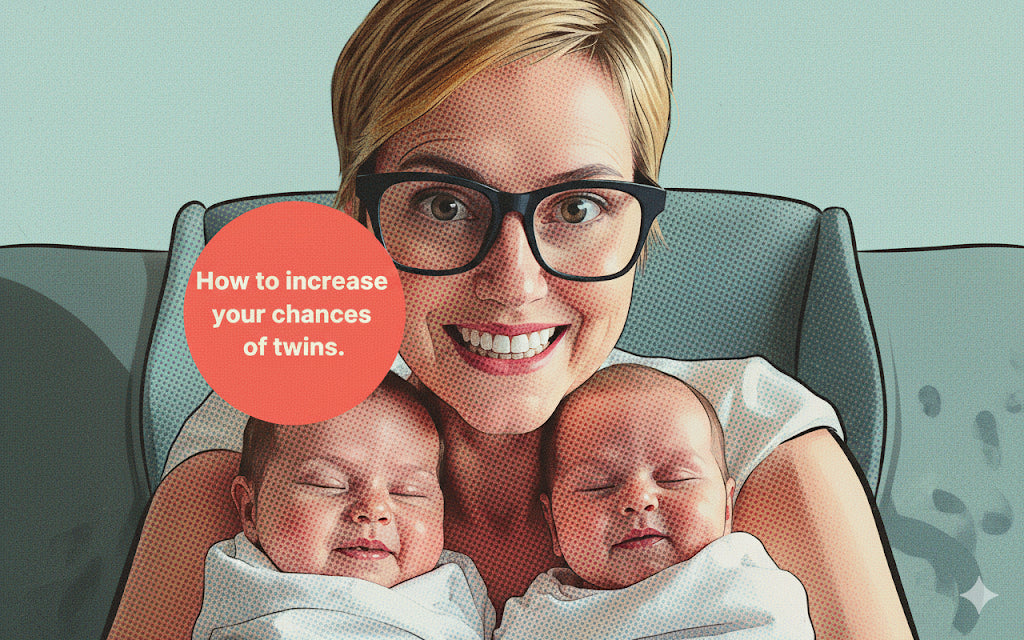
Doubling Up: How to Naturally Increase Your Chances of Having Twins
Welcome to the fascinating world of twins! If you're reading this, chances are you're intrigued by the idea of welcoming two bundles of joy into your family. But how can you increase your chances of having twins naturally? Well, you're in luck. Today, we're going to delve into the science behind twinning and explore some natural strategies that may just help you double your joy.
The Science of Twins: Understanding the Basics
Before we dive into the strategies, let's take a moment to understand the science behind twins. There are two types of twins: identical (monozygotic) and fraternal (dizygotic). Identical twins occur when a single egg splits into two after fertilization, while fraternal twins result from the fertilization of two separate eggs.
Fraternal twins are more common and are the type most influenced by genetic and environmental factors. As the famous geneticist, Dr. Francis Collins, once said, "Genetics is about how your genes interact with the environment and vice versa." This interaction is key when it comes to increasing your chances of having twins.
KEY INSIGHT
Fraternal twins, the most common type, are the variety most influenced by genetic and environmental factors, which means lifestyle choices and nutrition can genuinely shift your odds.
Strategies to Naturally Increase Your Chances of Having Twins
- Dairy Intake: A study published in the Journal of Reproductive Medicine found that women who consume dairy products are five times more likely to have twins. This is thought to be due to Insulin-like Growth Factor (IGF), a protein that is released from the liver of animals and humans in response to growth hormone. It's present in higher concentrations in non-organic cow's milk and may increase ovulation.
- Folate Intake: Folate, or vitamin B9, is essential for many bodily functions, including cell repair and growth. Some research suggests that women who consume more folate have a higher chance of conceiving twins. A high-quality prenatal supplement, like those offered by Conceivable, can ensure you're getting enough of this vital nutrient.
- Age: Women over 30, particularly those in their late 30s, naturally produce more Follicle Stimulating Hormone (FSH). This hormone can increase the likelihood of releasing multiple eggs during ovulation, thus increasing the chances of having twins.
- Family History: If you have a family history of twins, particularly on your mother's side, you may have a higher chance of conceiving twins naturally. This is due to the hereditary nature of hyperovulation, the process of releasing multiple eggs during ovulation.
- Healthy Weight: Studies show that women with a BMI in the normal to slightly higher range may have a higher chance of conceiving twins. This is due to increased estrogen levels, which can stimulate the ovaries to produce more than one egg.
5x
Women who consume dairy products are up to five times more likely to conceive twins, according to research in the Journal of Reproductive Medicine
- Breastfeeding: Women who conceive while breastfeeding are more likely to have twins. This is due to higher levels of prolactin, a hormone that can stimulate ovulation.
- Conception After Birth Control: Ovulation can be irregular after stopping birth control, sometimes leading to the release of multiple eggs in the first few cycles.
- Yam Consumption: Certain cultures with high twin rates attribute this to diets rich in yams and cassava. These foods contain phytoestrogens, which may stimulate ovulation.
- Multiple Pregnancies: Women with multiple pregnancies have higher chances of conceiving twins later in life. This is thought to be due to the body's adaptation to ovulation.
- Natural Supplements: Some natural supplements, like evening primrose oil, might support hormonal balance and increase ovulation.
Not Sure What Your Body Needs?
Take our free 2-minute quiz and get a personalized supplement protocol built around your specific cycle, hormones, and health signals.
Take the free Score → Explore the App →
The Twinning Truth: It's Not All Roses
While the idea of twins can be exciting, it's important to remember that twin pregnancies come with increased risks. As the renowned obstetrician Dr. Barbara Luke points out, "Twin pregnancies are more complicated than singletons. They require more careful monitoring and management."
"Twin pregnancies are more complicated than singletons. They require more careful monitoring and management."
Twins are more likely to be born prematurely, have low birth weights, and experience complications during delivery. So, while it's natural to dream about twins, it's also essential to understand the realities.
⚠️ IMPORTANT
Twin pregnancies carry higher risks than singleton pregnancies, including increased likelihood of preterm birth, low birth weight, and delivery complications. Always consult your OB or midwife before actively trying to influence ovulation or egg release.
The Conceivable Way: Optimizing Your Fertility
At Conceivable, we believe in optimizing your fertility to give you the best chance of a healthy pregnancy, whether that's with one baby or two. Our Kai system is designed to help identify all underlying fertility issues and build a comprehensive plan to address them.
Remember, while the strategies we've discussed can slightly increase your chances of having twins, many factors influence twinning, including genetics and hormonal balance. And while it's fun to dream about twins, our ultimate goal is to help you have a healthy baby, no matter how many you're hoping for.
Ready to optimize your fertility? Learn more about how Kai can help you on your journey to parenthood. Because when it comes to fertility, knowledge is power. Let's harness that power together.
📊 WHAT THE RESEARCH SAYS
A study in the Journal of Reproductive Medicine (PMID: 16838822) found that women who consumed dairy had significantly higher rates of twin pregnancies, attributed to elevated IGF levels in non-organic milk. Separately, NIH-cited research (PMID: 16462747) links higher folate intake to increased rates of dizygotic twinning, reinforcing the role of targeted nutritional support in supporting hyperovulation.
✦ THE CONCEIVABLE SYSTEM
Personalized Supplements. AI Care Team. The Halo Ring.
Everything your body needs to optimize fertility, built around your information, not someone else's.
Take the free Score → Check Out the App →
Frequently Asked Questions
Can you really increase your chances of having twins naturally?
Yes, to a degree. While you can't guarantee twins, certain factors, including dairy and folate intake, maternal age, family history, and hormonal patterns, are associated with higher rates of fraternal twinning. These influence hyperovulation, the release of more than one egg per cycle.
Does folate actually increase the chance of twins?
Some research suggests a link between higher folate intake and increased rates of dizygotic (fraternal) twinning. Folate supports cell division and may influence ovulation. Regardless of twin goals, folate is a critical nutrient for early pregnancy and should be part of any preconception supplement plan.
Are there risks to trying to conceive twins naturally?
Yes. Twin pregnancies carry higher risks than singletons, including preterm birth, low birth weight, gestational diabetes, and delivery complications. It's important to speak with your healthcare provider before actively trying to influence ovulation or making significant changes to your diet or supplement routine.
How does the Conceivable system actually work?
Conceivable combines three things: personalized supplement packs built from your quiz results and health data, an AI care team of 7 specialists (led by Kai, your fertility coordinator) who help you understand your pattern and can suggest a pack, and the Halo Ring for continuous biometric tracking. The system is built on published reproductive-health research and 20 years of clinical practice. It starts at $14.99/month.
How do I know which supplements I actually need?
Take the free 2-minute Conceivable quiz. It analyzes your cycle patterns, energy, stress, digestion, and health history to identify the specific nutrients your body needs, not a generic prenatal, but a protocol built for exactly where you are right now.
Do I need the Halo Ring to use Conceivable?
No. The Halo Ring is optional and adds overnight tracking of temperature, HRV and sleep, which Kai uses to help you understand your pattern and suggest a pack. But the personalized supplement packs and AI care team work without it. The ring is a one-time $250 purchase with no subscription required.
Resources:
Your Report puts your cycle, energy, sleep and symptoms in context, then shows what may be helping, what may be getting in the way, and where to start.
Get my Report, $89 Educational guidance, not a diagnosis.Kai is your AI fertility coordinator, built from 20 years of clinical practice. She can answer your specific questions right now.
Chat with Kai in the app
