


 .
. .
.
Cold Therapy and Progesterone: What the Research Actually Shows
Cold exposure has received significant attention in the wellness space, but the specific question of whether it affects progesterone production is more nuanced than most discussions acknowledge. Progesterone is the hormone responsible for maintaining the uterine lining after ovulation and supporting early pregnancy, making its adequacy directly relevant to conception and implantation outcomes.
How Cold Exposure Affects Hormonal Signaling
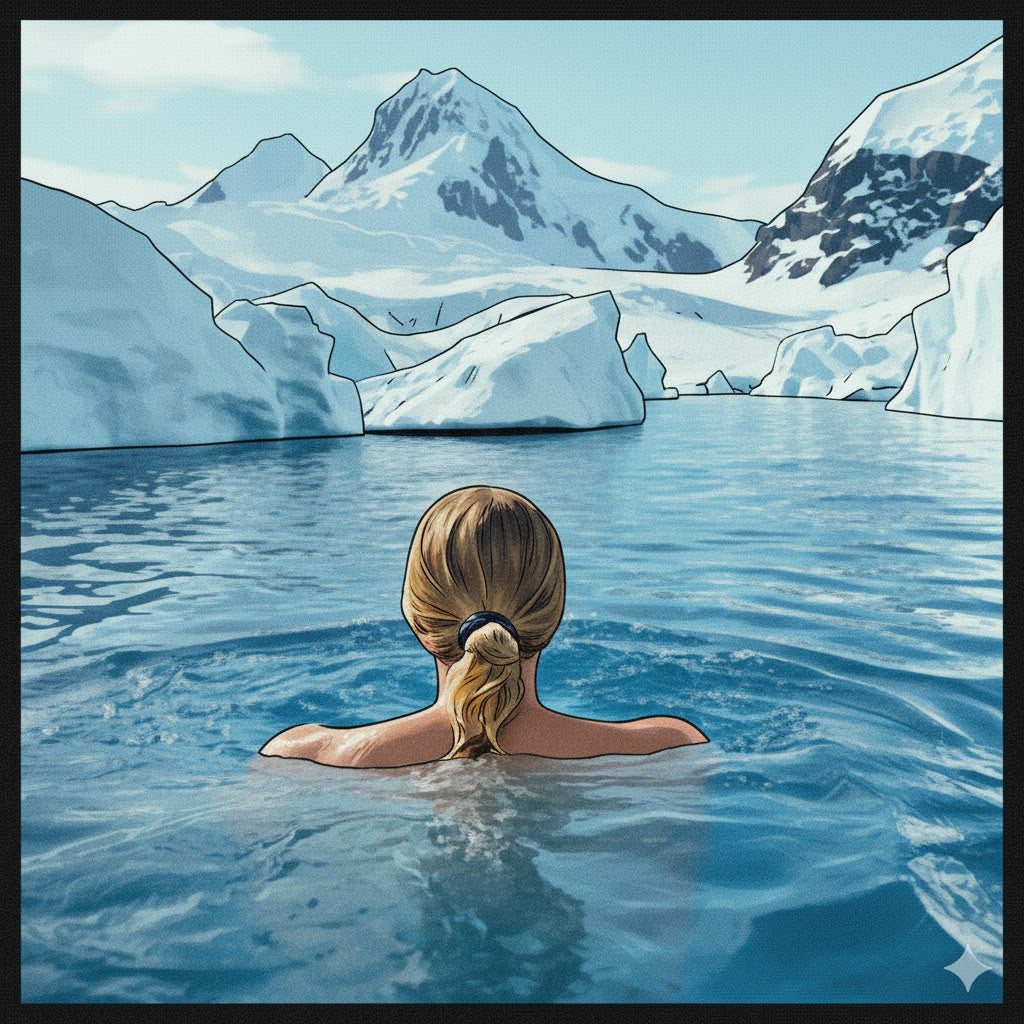
Cold therapy, including cold water immersion, cryotherapy, and cold showers, activates the sympathetic nervous system and stimulates norepinephrine release. Norepinephrine has downstream effects on the hypothalamic-pituitary axis, which governs the release of LH and FSH, the hormones that drive ovulation and corpus luteum function. The corpus luteum, formed after ovulation, is the primary source of progesterone during the luteal phase. In theory, anything that optimizes LH pulsatility and corpus luteum formation could support progesterone production.
KEY INSIGHT
The corpus luteum, formed after ovulation, is the primary source of progesterone during the luteal phase. Anything that disrupts LH pulsatility or corpus luteum health has a direct downstream effect on progesterone adequacy.
The Stress-Progesterone Relationship
Chronic physiological stress elevates cortisol, which competes with progesterone for the same precursor: pregnenolone. When cortisol demand is high, the body preferentially shunts pregnenolone toward cortisol production, a phenomenon sometimes called "pregnenolone steal." Low-intensity cold exposure may have a hormetic effect, providing a brief stress stimulus that improves stress resilience over time without chronically elevating cortisol. However, extreme or prolonged cold exposure can have the opposite effect, suppressing reproductive hormones in the same way that over-training does.
"When cortisol demand is high, the body preferentially shunts pregnenolone toward cortisol production, directly reducing the raw material available for progesterone synthesis."
✦ KEEP READING
✦ KEEP READING
Not Sure What Your Body Needs?
Take our free 2-minute quiz and get a personalized supplement protocol built around your specific cycle, hormones, and health signals.
Take the free Score → Explore the App →
What Adequate Progesterone Requires
Progesterone levels below 10 ng/mL in the mid-luteal phase are generally considered insufficient for implantation support, though some clinicians use a threshold of 15-20 ng/mL as optimal. Ensuring adequate progesterone requires: a well-executed LH surge driving complete ovulation, a healthy corpus luteum with adequate blood supply, sufficient LDL cholesterol as a steroid precursor, adequate thyroid function (TSH below 2.5 mIU/L for fertility purposes), and normal insulin sensitivity. Cold therapy alone does not address the majority of these factors. Addressing nutritional deficiencies, particularly in zinc, magnesium, and vitamin B6, all of which are involved in progesterone synthesis, is typically more directly impactful.
10 ng/mL
Minimum mid-luteal progesterone for implantation support, with many clinicians targeting 15–20 ng/mL as optimal for conception
📊 WHAT THE RESEARCH SAYS
Zinc, magnesium, and vitamin B6 are all directly involved in progesterone synthesis pathways. Deficiencies in these nutrients are among the most clinically addressable drivers of low luteal-phase progesterone, and are often more impactful than lifestyle interventions like cold therapy alone.
Practical Considerations for Cold Therapy
For women trying to conceive, brief cold exposure, 2 to 3 minutes in cold water (55-65°F / 13-18°C), appears safe based on current evidence and may support autonomic nervous system balance, which has indirect benefits for hormonal regulation. Cryotherapy chambers and very prolonged cold exposure have not been well-studied in the context of female fertility specifically, and extreme cold exposure can suppress reproductive hormones in the same pattern seen with over-training syndrome.
⚠️ IMPORTANT
Extreme or prolonged cold exposure, including extended cryotherapy sessions, can suppress reproductive hormones in the same pattern seen with over-training syndrome. If you're actively trying to conceive, stick to brief, moderate cold exposure and monitor how your body responds across your cycle.
✦ THE CONCEIVABLE SYSTEM
Personalized Supplements. AI Care Team. The Halo Ring.
Everything your body needs to optimize fertility, built around your information, not someone else's.
Take the free Score → Check Out the App →
Frequently Asked Questions
Can cold therapy directly raise progesterone levels?
Not directly. Cold therapy may support the hormonal environment by improving autonomic nervous system balance and stress resilience, which can indirectly reduce cortisol-driven pregnenolone steal. But it does not replace the nutritional, thyroid, and ovulatory factors that are the primary drivers of progesterone adequacy.
Is cold exposure safe during the luteal phase when trying to conceive?
Brief, moderate cold exposure (2–3 minutes at 55–65°F) appears safe based on current evidence. However, extreme or prolonged cold exposure is not well-studied in the context of female fertility and may suppress reproductive hormones. When in doubt, err toward shorter, less intense sessions and pay attention to any changes in your cycle length or luteal phase symptoms.
What nutrients most directly support progesterone production?
Zinc, magnesium, and vitamin B6 are among the most clinically relevant nutrients for progesterone synthesis. Adequate thyroid function (TSH below 2.5 mIU/L) and normal insulin sensitivity also play significant roles. These factors are typically more directly impactful than cold therapy when it comes to optimizing luteal-phase progesterone.
How does the Conceivable system actually work?
Conceivable combines three things: personalized supplement packs built from your quiz results and health data, an AI care team of 7 specialists (led by Kai, your fertility coordinator) who help you understand your pattern and can suggest a pack, and the Halo Ring for continuous biometric tracking. The system is built on published reproductive-health research and 20 years of clinical practice. It starts at $14.99/month.
How do I know which supplements I actually need?
Take the free 2-minute Conceivable quiz. It analyzes your cycle patterns, energy, stress, digestion, and health history to identify the specific nutrients your body needs, not a generic prenatal, but a protocol built for exactly where you are right now.
Do I need the Halo Ring to use Conceivable?
No. The Halo Ring is optional and adds overnight tracking of temperature, HRV and sleep, which Kai uses to help you understand your pattern and suggest a pack. But the personalized supplement packs and AI care team work without it. The ring is a one-time $250 purchase with no subscription required.
Written by Kirsten Karchmer, founder of Conceivable. She has worked in reproductive health for 26 years, including 20 years in clinical practice, and is a former board-certified reproductive acupuncturist (ABORM) and the author of Seeing Red (Simon & Schuster).
Your Report puts your cycle, energy, sleep and symptoms in context, then shows what may be helping, what may be getting in the way, and where to start.
Get my Report, $89 Educational guidance, not a diagnosis.Kai is your AI fertility coordinator, built from 20 years of clinical practice. She can answer your specific questions right now.
Chat with Kai in the app
